
Custom furniture
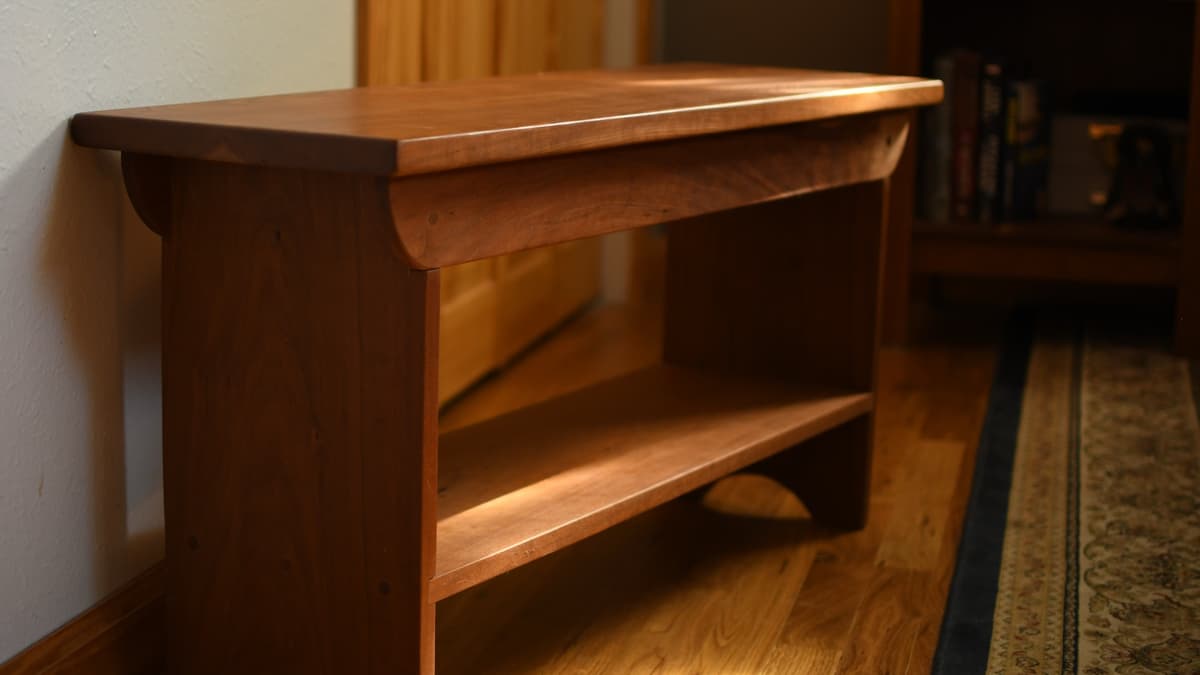
Heirloom dining tables, beds, live-edge consoles and statement pieces.
Shop services
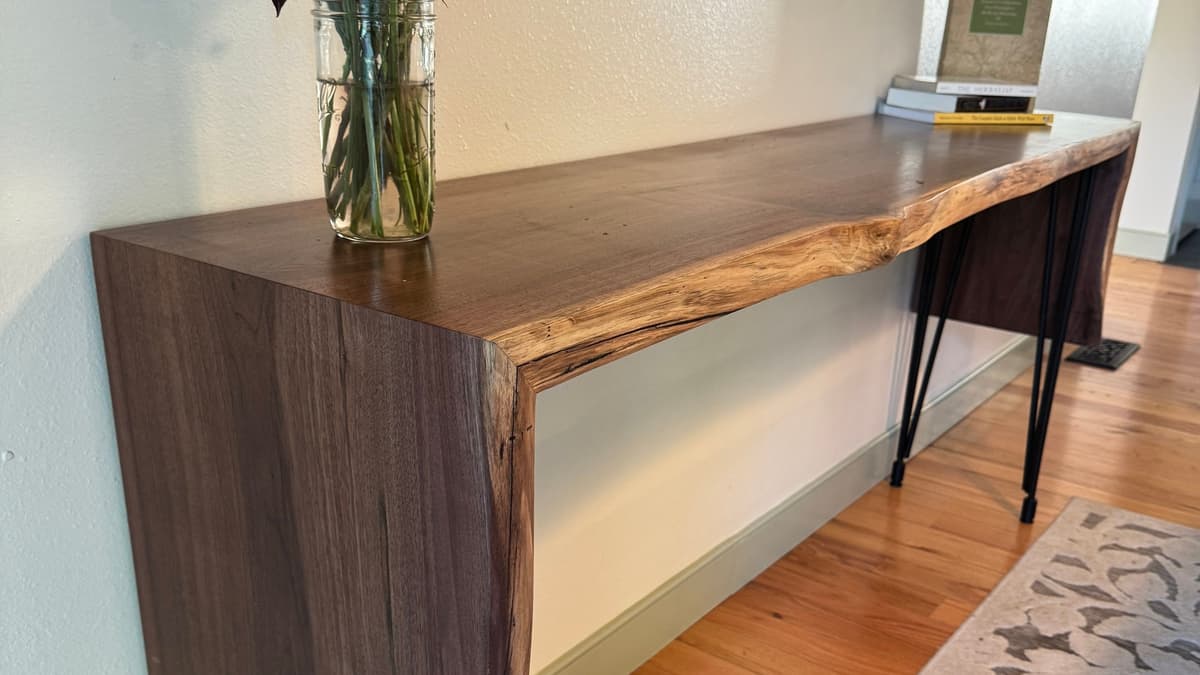
Live-edge slabs flattened and sanded for dining tables, countertops and statement pieces, and rough lumber milled into workable stock, stable, smooth and ready to build with.
What we build
Slab and lumber work for projects around Springfield, MO and the 417, and what each step means for the wood.
The process
We combine craftsmanship with professional-grade equipment. Whatever machine does the cutting, a slab goes through the same four steps.
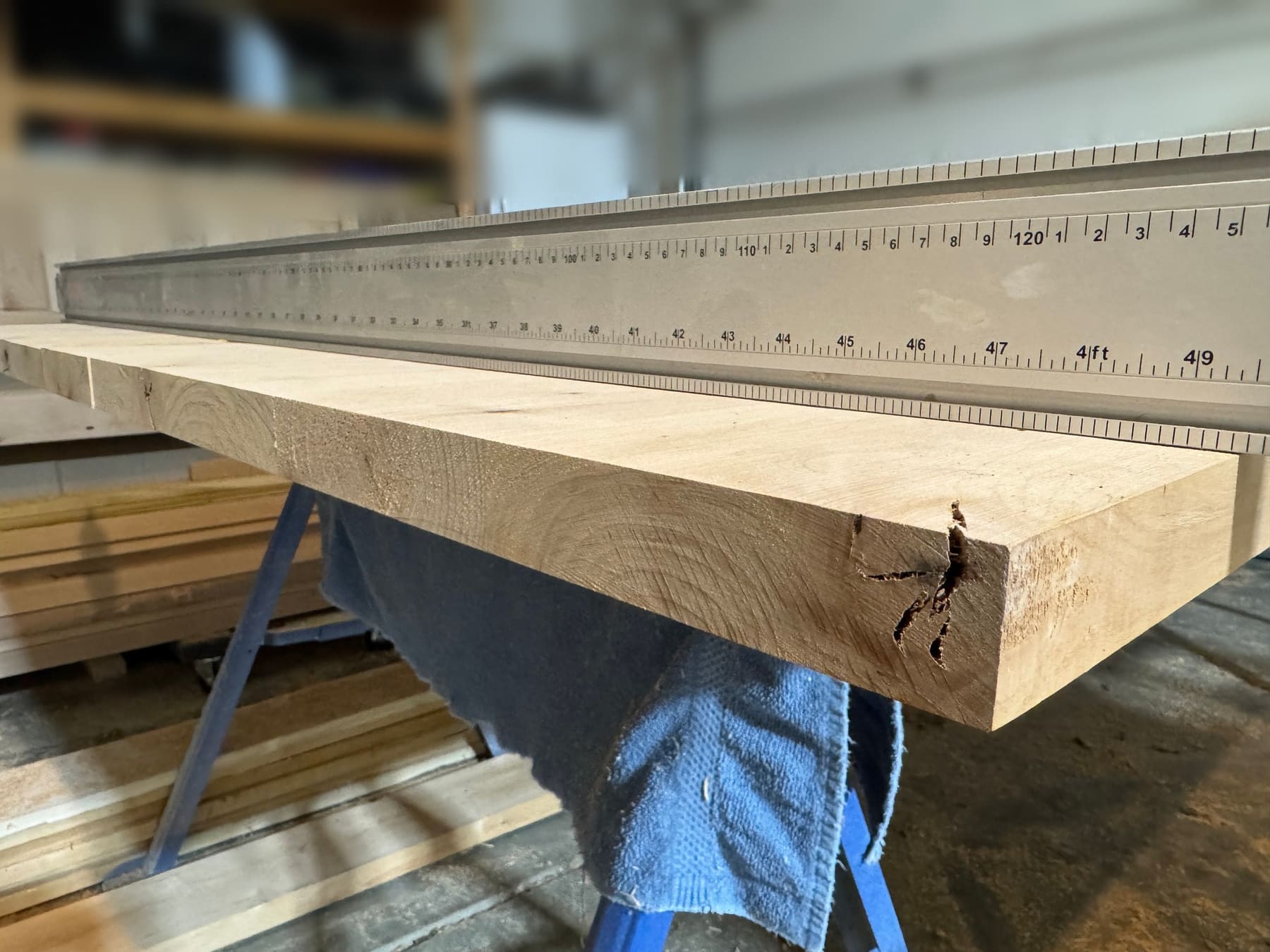
A slab above its indoor target keeps moving as it dries, so moisture comes before flattening. Indoor furniture sits around 6 to 10% in most of the US.
A router sled or CNC works like an oversized jointer, taking off the high spots until one face is flat. A planer alone can’t: it copies the curve riding on its bed.
With the flat face down, the second face is cut parallel to it, to an even thickness end to end.
Precision sanding takes out the tool marks and leaves a smooth, uniform surface, ready for finish.
Wood movement
Wood shrinks and swells as it loses and gains moisture, and not evenly. Below, the end grain of three boards, with the dried shape dashed and exaggerated.
Wood shrinks about twice as much along the rings as across them, so the face nearer the bark shrinks more and the board cups away from the pith.
The rings run through the thickness, so the width moves about half as much and the board stays flatter.
Wood near the pith can shrink about 2% along its length, against 0.1 to 0.2% for normal wood, so center cuts warp and check more.
A slab stored outdoors or in an unheated building in Missouri settles well above the indoor target, and air drying alone won’t get it there. That’s why moisture comes first, and why flattening takes out the cup that’s there while the base and finish allow for the rest.
Source: USDA Forest Products Laboratory, Wood Handbook (FPL-GTR-190), chapters 4, 13 and 16.
Cost
Slab and milling work depends on size and condition, so we talk it through before quoting. For a sense of scale, one shop publishes its rates below.
One shop’s published rates, not a Cambium quote
| Scope | Published rate | Source |
|---|---|---|
| CNC wood slab flattening, per sq ft, per side | $5, $50 minimum | The Fine Grainery, undated |
| Hourly rate that shop reports as typical elsewhere | $100 to $150 | The Fine Grainery, undated |
A Virginia shop’s own figures, checked September 2026. There’s no national survey for this work, and Cambium doesn’t publish a rate.
Questions
Anything else, call or text.
Close to the moisture it’ll live at. The USDA Wood Handbook puts indoor furniture at 6 to 10% in most of the US, and furniture lumber is usually dried to 6 to 8%. A slab that’s flattened while it’s still drying keeps moving afterward.
Flattening removes the cup and twist that’s there now. Dry wood still moves a little with humidity, so the base has to let the top move, and steady indoor humidity helps. At 70 degrees F, 30 to 50% relative humidity keeps wood at about 6 to 9% moisture (Wood Handbook).
A planer copies the face riding on its bed, so a cupped or twisted slab comes out thinner but still curved, and most slabs are too wide for a jointer. Router sleds, CNC machines and wide-belt sanders are the usual tools (Blacktail Studio, Rockler).
Ends dry 10 to 15 times faster than faces, which is why checks start there and why sealing the ends early helps (Wood Handbook). Long splits in big slabs are traditionally bridged with butterfly keys, which are decorative and structural at once (Popular Woodworking).
How it works
From the first conversation to wood that’s flat, sanded and ready to build with.
We review your ideas, your space and your style.
You get a detailed plan, a timeline and an estimate.
We build your project to the plan you approved.
The slab or stock comes out flat, sanded and ready for the build or the finish.
Related
Heirloom dining tables, beds, live-edge consoles and statement pieces.
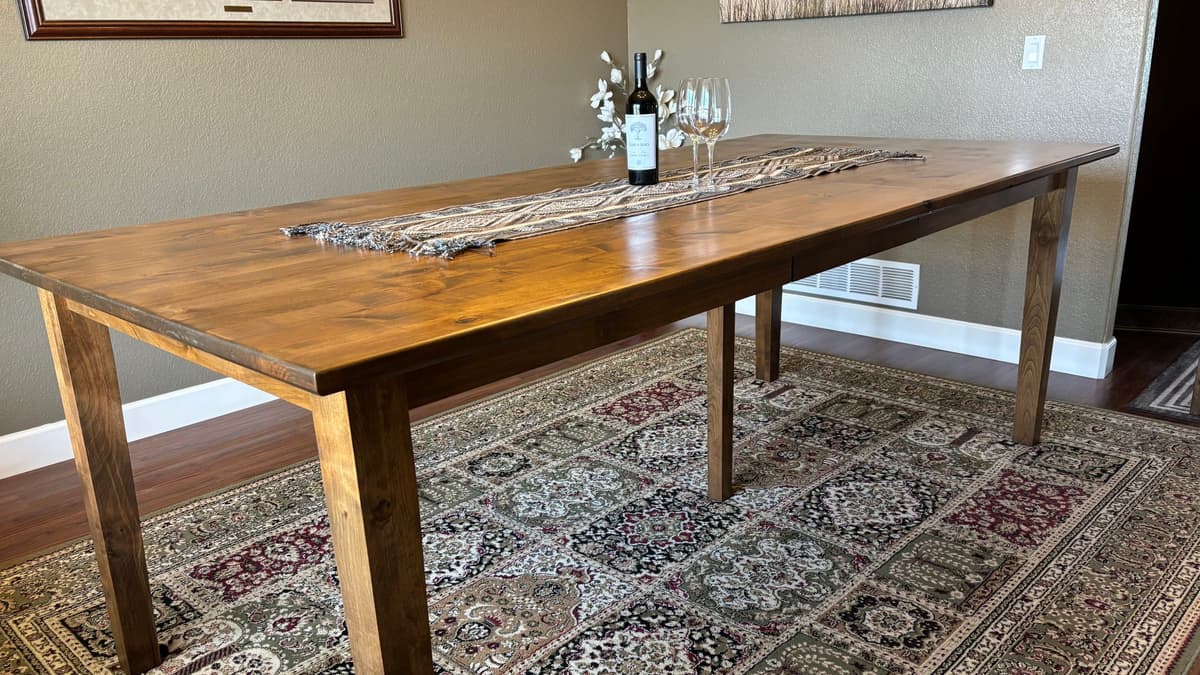
Heirloom dining tables and benches sized to your room and your household.
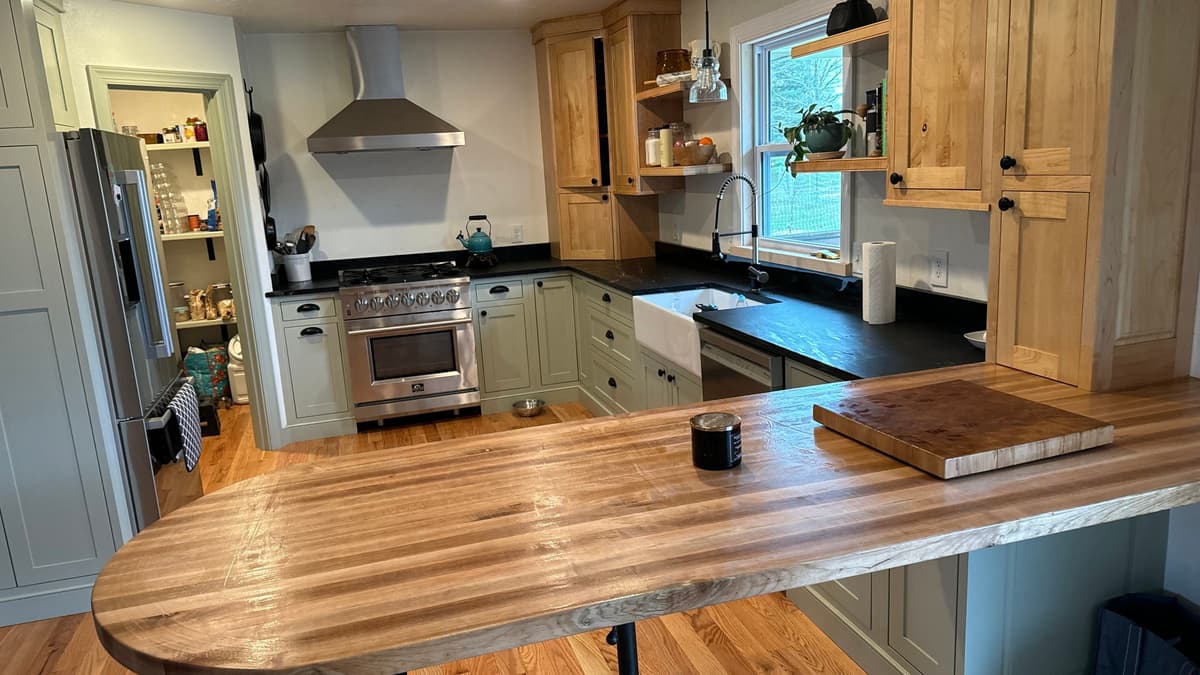
Whole kitchens, baths and laundry rooms, designed, built and installed.
Start a project
Tell us what you’re planning, whether it’s a dining table, a countertop or a console, and roughly how big. We’ll get back to you to talk it through.