
Wood guide
Choosing a wood
An honest buyer’s guide to the 13 woods people ask us about: how hard each one is, how it looks, stains and ages, what it costs next to the others, and how much it moves. The facts come from The Wood Database, the USDA Forest Products Laboratory and the Missouri Department of Conservation.
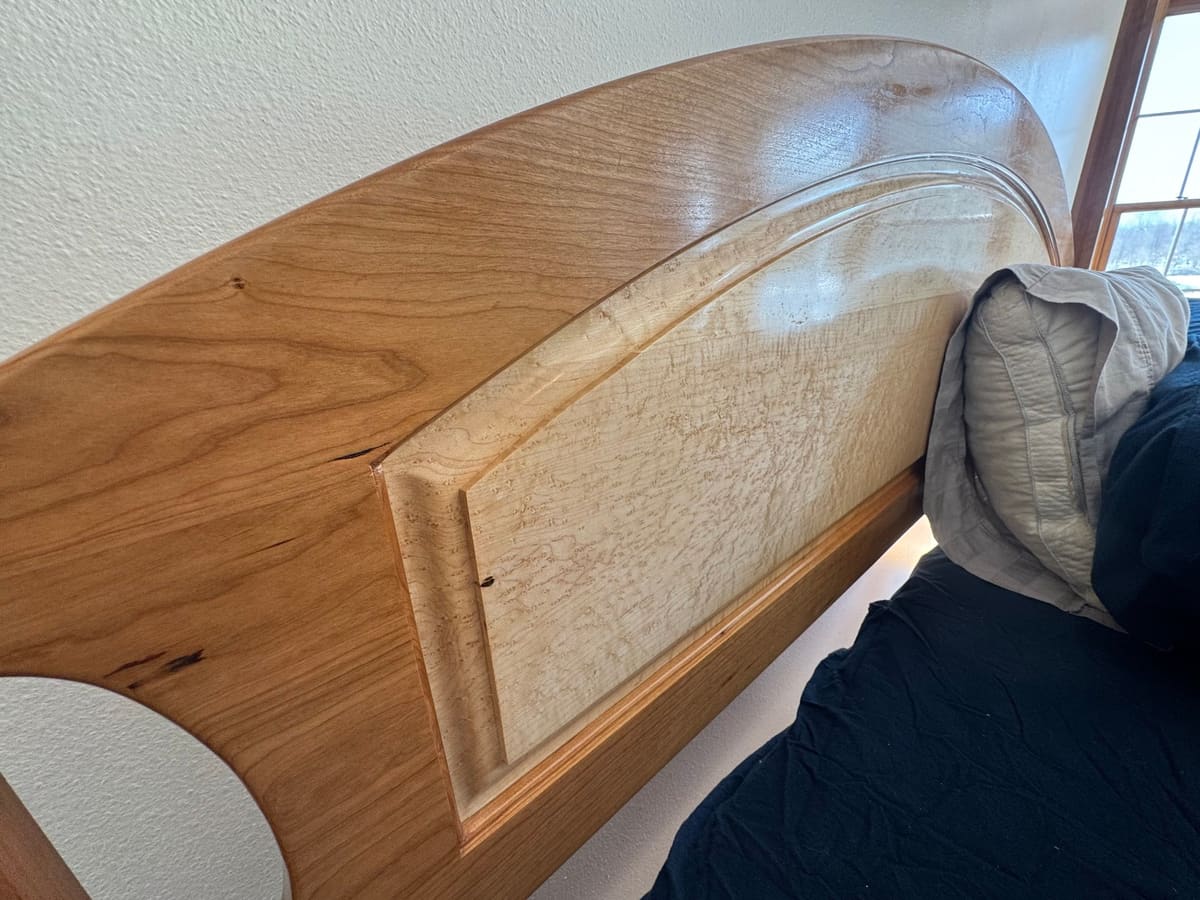
Explorer
Explore 13 woods
Filter by what you’re building, sort by hardness, cost or name, and open any wood for its full profile and sources. It’s a guide to the woods people ask about, not our shop inventory.
- Janka hardness The force in pounds (lbf) it takes to press a steel ball halfway into the wood. Higher resists dents better. Bars run 0 to 2,000 lbf.
- Cost tier 1 to 4 Relative lumber cost, averaged across two retail price lists from September 2026. A comparison, not a quote.
- Representative samples The swatches are computer-generated samples. Real boards vary in color and figure.
All 13 woods, hardest first.
-
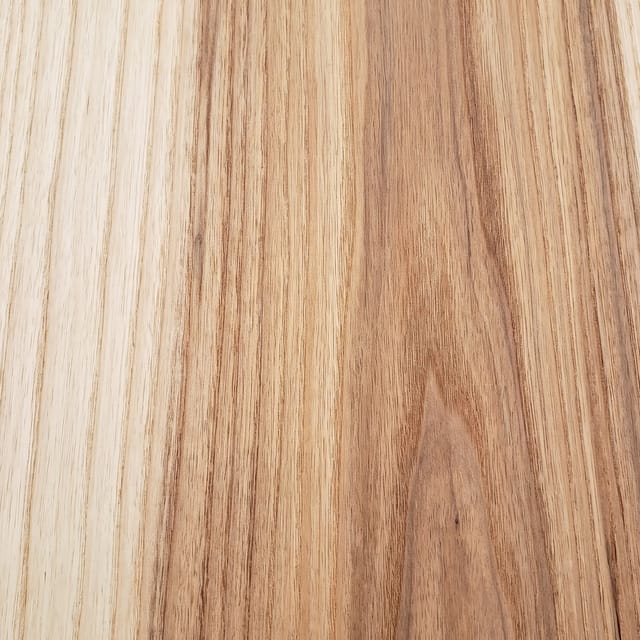
Hickory / pecan
Carya spp. (shagbark C. ovata, mockernut C. tomentosa, pecan C. illinoinensis)
The hardest wood in this lineup, with dramatic light-and-dark "calico" contrast and serious toughness.
- Janka hardness
- 1,880 lbf (shagbark)
- Cost
- Cost tier 2 of 4
Use this wood, hickory / pecan, in my projectFull profile: Hickory / pecan
The hardest wood in this lineup, with dramatic light-and-dark "calico" contrast and serious toughness.
- Color
- Heartwood light to medium brown with a reddish hue; sapwood paler yellowish brown. Boards mixing both are sometimes marketed as "Calico Hickory".
- Grain
- Usually straight, occasionally wavy; medium texture.
- Janka hardness
- Shagbark 1,880 lbf (8,360 N); mockernut 1,970 lbf (8,760 N); pecan 1,820 lbf (8,100 N)
- How it ages
- No species-specific color-change statement on the Wood Database page. General rule from the USDA Wood Handbook (ch. 16): indoors, light woods tend to darken and dark woods lighten, driven by visible light. Applying that rule to this species is our inference.
- Stain and finish
- Glues, stains, and finishes well (Wood Database). The USDA Wood Handbook shows No. 2 grade hickory finished to accentuate its color variation and knots.
- Working it
- Difficult to work: tearout is common if edges are not sharp, and it blunts cutters. Responds well to steam bending (Wood Database). Hickory and pecan are mixed together and sold as "hickory".
- Common uses
- Flooring, tool handles, furniture and ladder rungs. Its toughness also suits rustic cabinetry.
- Movement
- A 36-inch board going from 6% to 10% moisture moves about 0.59 in. flatsawn and 0.37 in. quartersawn (USDA Wood Handbook). Tangential shrinkage, green to oven-dry: 10.5%.
- Cost
- Cost tier 2 of 4. 4/4 base: $6.00/bf at The Wood Yard (knotty $5.25); $3.60/bf at CR Muterspaw. Hearne lists hickory FAS 4/4 at $5.00 and pecan at $4.50. Wood Database: low to mid range, comparable to red oak or soft maple. Missouri: North-region hickory sawlogs averaged $164.65 per MBF (Doyle) in Jan to Mar 2026 (MDC).
- Missouri
- MDC: shagbark is native and statewide, the most common hickory north of the Missouri River; mockernut is nearly statewide and most common south of it; pecan occurs statewide except the northwestern counties. Hickory is the fourth most harvested group in Missouri after red oak, white oak, and walnut (MDC).
Sources The Wood Database: shagbark hickory; The Wood Database: mockernut hickory; The Wood Database: pecan; USDA Wood Handbook, ch. 16; MDC field guide: mockernut hickory; MDC field guide: pecan; MDC field guide: shagbark hickory; MDC Conservationist, Dec 2017; The Wood Yard price list; CR Muterspaw price list; Hearne Hardwoods price list; MDC Timber Price Trends, Jan to Mar 2026; USDA Wood Handbook, ch. 13
-
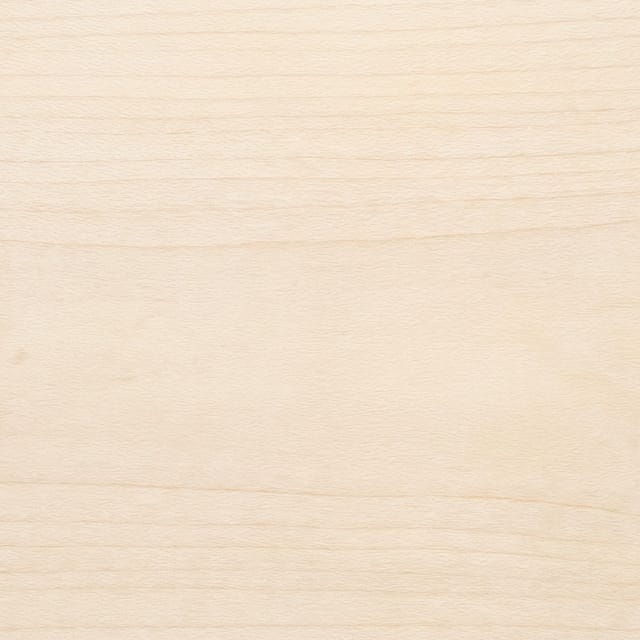
Hard maple
Acer saccharum (sugar maple)
Pale, tight-grained, and tough: the classic wood for cutting boards, butcher blocks, and workbenches.
- Janka hardness
- 1,450 lbf
- Cost
- Cost tier 3 of 4
Use this wood, hard maple, in my projectFull profile: Hard maple
Pale, tight-grained, and tough: the classic wood for cutting boards, butcher blocks, and workbenches.
- Color
- The sapwood is the part usually sold: nearly white to off-white cream, sometimes with a reddish or golden hue. Heartwood is a darker reddish brown. Birdseye, curly, and quilted figure occur.
- Grain
- Generally straight, may be wavy; fine, even texture.
- Janka hardness
- 1,450 lbf (6,450 N)
- How it ages
- No species-specific color-change statement on the Wood Database page. General rule from the USDA Wood Handbook (ch. 16): indoors, light woods tend to darken and dark woods lighten, driven by visible light. Applying that rule to this species is our inference. Oil-based polyurethane also adds a yellow cast to white woods like maple (Popular Woodworking).
- Stain and finish
- Blotches can occur when staining; a pre-conditioner, gel stain, or toner may be needed for even color (Wood Database). Water-soluble dyes reduce blotching somewhat on hard maple (Popular Woodworking, Southwick). Left natural under a water-based finish, it stays pale.
- Working it
- Fairly easy to work though harder than soft maple; tends to burn with high-speed cutters such as router bits (Wood Database).
- Common uses
- Cutting boards, Butcher blocks, Workbenches, Flooring, Furniture, Musical instruments, Turned objects.
- Movement
- A 36-inch board going from 6% to 10% moisture moves about 0.51 in. flatsawn and 0.24 in. quartersawn (USDA Wood Handbook). Tangential shrinkage, green to oven-dry: 9.9%.
- Cost
- Cost tier 3 of 4. 4/4 base: $8.35/bf at The Wood Yard; $5.25/bf (white) at CR Muterspaw. Hearne lists FAS at $9.00 to $16.00. Wood Database: moderately priced, slightly more than soft maple; figured birdseye, curl, or quilt costs much more. Missouri: North-region hard maple sawlogs averaged $132.99 per MBF (Doyle) in Jan to Mar 2026 (MDC).
- Missouri
- MDC: sugar maple "common statewide", largest and densest in the Mississippi and Missouri river hills. Hard maple sawlogs are tracked in MDC Timber Price Trends (North region).
Sources The Wood Database: hard maple; USDA Wood Handbook, ch. 16; Southwick, How to Control Blotching; Popular Woodworking, water-based vs oil-based poly; MDC field guide: sugar maple; MU Extension G5006; MDC Timber Price Trends, Jan to Mar 2026; The Wood Yard price list; CR Muterspaw price list; Hearne Hardwoods price list; USDA Wood Handbook, ch. 13
-
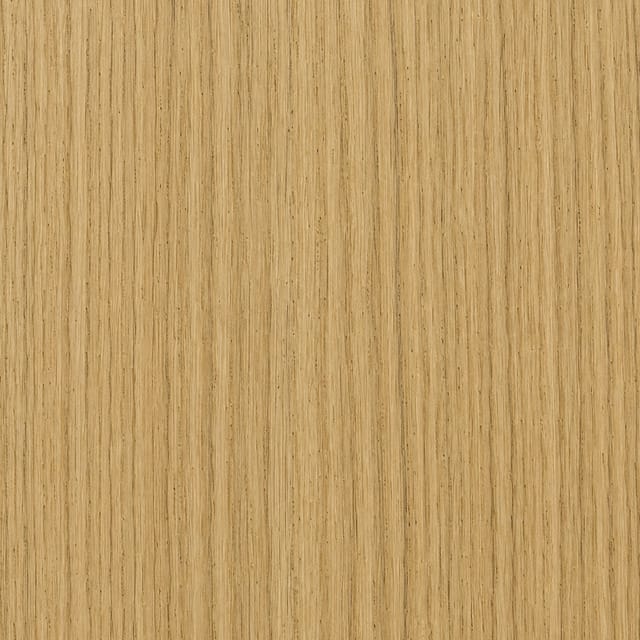
White oak
Quercus alba
The Missouri workhorse: strong, rot-resistant, and showing prominent ray fleck when quartersawn.
- Janka hardness
- 1,350 lbf
- Cost
- Cost tier 3 of 4
Use this wood, white oak, in my projectFull profile: White oak
The Missouri workhorse: strong, rot-resistant, and showing prominent ray fleck when quartersawn.
- Color
- Heartwood light to medium brown, commonly with an olive cast. Paler sapwood is not always sharply separated from heartwood. Quartersawn faces show prominent ray fleck.
- Grain
- Straight grain with a coarse, uneven texture.
- Janka hardness
- 1,350 lbf (5,990 N)
- How it ages
- No species-specific color-change statement on the Wood Database page. General rule from the USDA Wood Handbook (ch. 16): indoors, light woods tend to darken and dark woods lighten, driven by visible light. Applying that rule to this species is our inference. The Wood Database color-change article lists oak among woods that "get better with age".
- Stain and finish
- Glues, stains, and finishes well (Wood Database). Flexner: oak does not tend to blotch. Iron contact (for example steel wool residue) can cause dark staining; FPL advises never using steel wool on floors for this reason.
- Working it
- Good results with hand and machine tools; fairly high shrinkage gives mediocre stability in flatsawn boards. Scored near the top in machinability of domestic hardwoods. Can react with iron and stain when wet (Wood Database).
- Common uses
- Cabinetry, Furniture, Interior trim, Flooring, Barrels, Boatbuilding, Veneer.
- Movement
- A 36-inch board going from 6% to 10% moisture moves about 0.53 in. flatsawn and 0.26 in. quartersawn (USDA Wood Handbook). Tangential shrinkage, green to oven-dry: 10.5%.
- Cost
- Cost tier 3 of 4. 4/4 base: $10.00/bf at The Wood Yard (knotty $7.50, quartersawn $14.50); $8.65/bf at CR Muterspaw. Hearne lists quartersawn at $12.50 to $19.00 and rift at $16.00 to $22.50. Wood Database: usually slightly more than red oak; quartersawn and thick stock cost more. Quartersawn white oak alone would land in Tier 4. Missouri: North-region white oak sawlogs averaged $473.83 per MBF (Doyle) and stave logs $1,655.05 in Jan to Mar 2026 (MDC).
- Missouri
- MDC: found statewide, one of the state’s most ubiquitous trees; wood is "second only to walnut in unit value". White oaks are 30% of statewide harvest volume (MDC). Missouri is a national leader in oak barrel production.
Sources The Wood Database: white oak; USDA Wood Handbook, ch. 16; Flexner, Battling Blotching; MDC field guide: white oak; MDC Conservationist, Dec 2017; MU Extension G5006; The Wood Yard price list; CR Muterspaw price list; Hearne Hardwoods price list; MDC Timber Price Trends, Jan to Mar 2026; USDA Wood Handbook, ch. 13
-
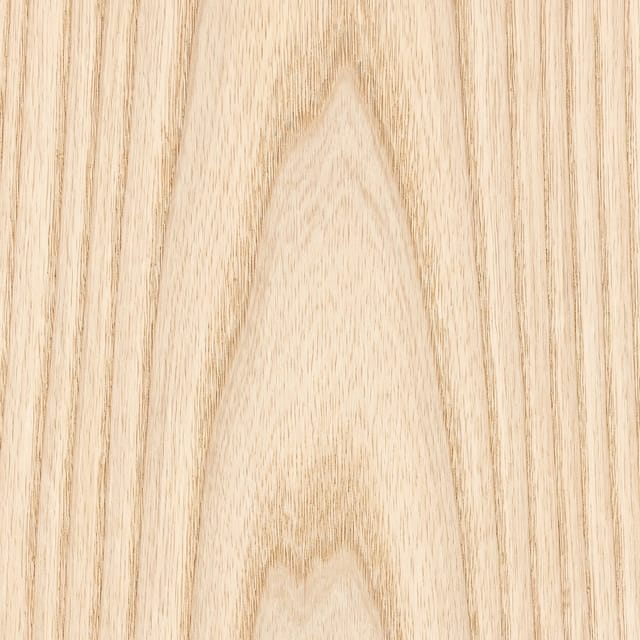
White ash
Fraxinus americana
Oak-like grain in a paler, creamier tone; a native Missouri hardwood now under threat from the emerald ash borer.
- Janka hardness
- 1,320 lbf
- Cost
- Cost tier 2 of 4
Use this wood, white ash, in my projectFull profile: White ash
Oak-like grain in a paler, creamier tone; a native Missouri hardwood now under threat from the emerald ash borer.
- Color
- Heartwood light to medium brown; wide sapwood beige or light brown, not always clearly separated from heartwood.
- Grain
- Medium to coarse texture similar to oak; grain almost always straight and regular, occasionally curly.
- Janka hardness
- 1,320 lbf (5,870 N)
- How it ages
- No species-specific color-change statement on the Wood Database page. General rule from the USDA Wood Handbook (ch. 16): indoors, light woods tend to darken and dark woods lighten, driven by visible light. Applying that rule to this species is our inference.
- Stain and finish
- Glues, stains, and finishes well (Wood Database). Flexner: ash does not tend to blotch. Water-based finishes add no color, which suits pale woods like ash (Flexner).
- Working it
- Good results with hand or machine tools; steam bends well (Wood Database).
- Common uses
- Cabinets, Doors, Millwork, Flooring, Baseball bats, Tool handles.
- Movement
- A 36-inch board going from 6% to 10% moisture moves about 0.39 in. flatsawn and 0.24 in. quartersawn (USDA Wood Handbook). Tangential shrinkage, green to oven-dry: 7.8%.
- Cost
- Cost tier 2 of 4. 4/4 base: $6.10/bf at The Wood Yard; $4.85/bf at CR Muterspaw. Hearne lists FAS at $6.00 to $8.50. Wood Database: among the least expensive utility hardwoods, similar to oak.
- Missouri
- MDC: found statewide with excellent timber value (Louisville Slugger bats). The emerald ash borer has arrived in Missouri and MDC says its presence means nearly all ash trees will die, so future Missouri supply is uncertain.
Sources The Wood Database: white ash; USDA Wood Handbook, ch. 16; Flexner, Battling Blotching; Flexner, Choosing a Finish for Color; MDC field guide: white ash; MDC field guide: green ash; The Wood Yard price list; CR Muterspaw price list; Hearne Hardwoods price list; USDA Wood Handbook, ch. 13
-
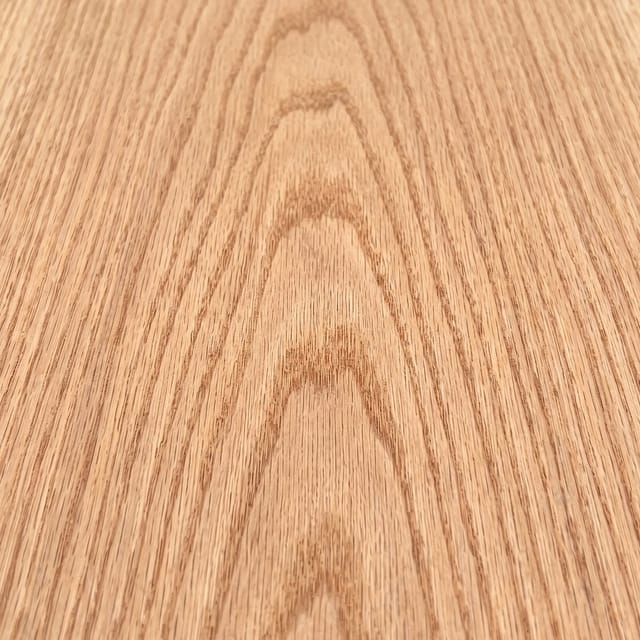
Red oak
Quercus rubra
Missouri’s most harvested hardwood: warm reddish tone, bold open grain, and a friendly price.
- Janka hardness
- 1,220 lbf
- Cost
- Cost tier 2 of 4
Use this wood, red oak, in my projectFull profile: Red oak
Missouri’s most harvested hardwood: warm reddish tone, bold open grain, and a friendly price.
- Color
- Heartwood light to medium brown, commonly with a reddish cast. Paler sapwood is not always sharply separated. Quartersawn faces show prominent ray fleck.
- Grain
- Straight grain, coarse and uneven texture. Pores are so open that air can be blown through a straight-grained board end to end.
- Janka hardness
- 1,220 lbf (5,430 N)
- How it ages
- No species-specific color-change statement on the Wood Database page. General rule from the USDA Wood Handbook (ch. 16): indoors, light woods tend to darken and dark woods lighten, driven by visible light. Applying that rule to this species is our inference.
- Stain and finish
- Glues, stains, and finishes well (Wood Database). Flexner: oak does not tend to blotch. FPL: large-pore woods such as red oak need pore filler to get a smooth, glossy surface.
- Working it
- Good results with hand and machine tools; high shrinkage, mediocre stability when flatsawn. Can react with iron. Not rot resistant; can discolor where wetted (Wood Database).
- Common uses
- Cabinetry, Furniture, Interior trim, Flooring, Veneer.
- Movement
- A 36-inch board going from 6% to 10% moisture moves about 0.53 in. flatsawn and 0.23 in. quartersawn (USDA Wood Handbook). Tangential shrinkage, green to oven-dry: 8.6%.
- Cost
- Cost tier 2 of 4. 4/4 base: $6.10/bf at The Wood Yard; $3.45/bf at CR Muterspaw. Hearne lists $3.00 to $10.50 across grades. Wood Database: moderate for a domestic hardwood, usually slightly less than white oak. Missouri: North-region red oak group sawlogs averaged $174.29 per MBF (Doyle) in Jan to Mar 2026 (MDC).
- Missouri
- MDC: northern red oak found statewide. MU Extension G5006: "found statewide, commonly on shallow, rocky soils." Red oaks are the most harvested species group in Missouri at 43% of volume (MDC).
Sources The Wood Database: red oak; USDA Wood Handbook, ch. 16; Flexner, Battling Blotching; MDC field guide: northern red oak; MDC Conservationist, Dec 2017; MU Extension G5006; The Wood Yard price list; CR Muterspaw price list; Hearne Hardwoods price list; MDC Timber Price Trends, Jan to Mar 2026; USDA Wood Handbook, ch. 13
-
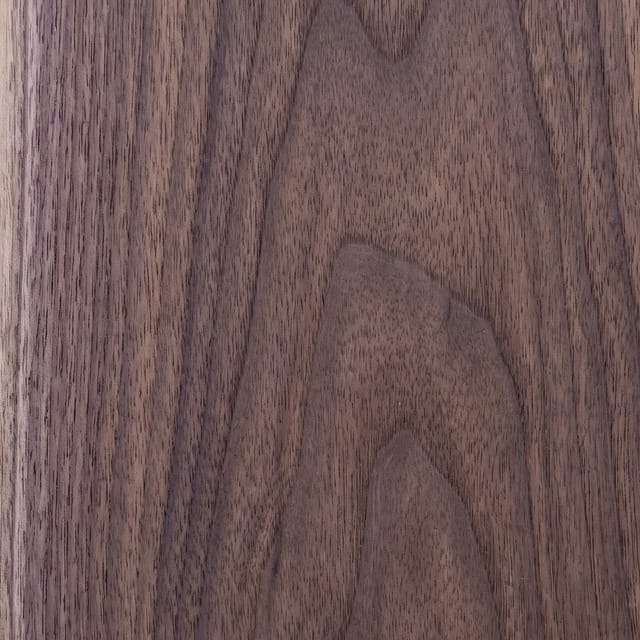
Black walnut
Juglans nigra
Missouri’s most valuable native hardwood: chocolate-brown heartwood that works easily and is prized for furniture and cabinetry.
- Janka hardness
- 1,010 lbf
- Cost
- Cost tier 4 of 4
Use this wood, black walnut, in my projectFull profile: Black walnut
Missouri’s most valuable native hardwood: chocolate-brown heartwood that works easily and is prized for furniture and cabinetry.
- Color
- Heartwood ranges from pale brown to dark chocolate brown with darker streaks, sometimes with a gray, purple, or reddish cast. Sapwood is pale yellow-gray to nearly white. Curl, crotch, and burl figure occur.
- Grain
- Usually straight but can be irregular; medium texture with moderate natural luster. Planer tearout can occur on irregular or figured grain.
- Janka hardness
- 1,010 lbf (4,490 N)
- How it ages
- Tends to lighten slightly over time, a smaller change than cherry’s darkening (DutchCrafters furniture retailer). Consistent with the USDA Wood Handbook rule that dark woods get lighter under visible light.
- Stain and finish
- Glues, stains, and finishes well, though walnut is rarely stained (Wood Database). Bob Flexner: on walnut, blotching is usually very attractive. Sapwood is much lighter, and wastage can be high if sapwood is not planned for.
- Working it
- Typically easy to work when grain is straight. Glues, stains, and finishes well. Good dimensional stability (Wood Database).
- Common uses
- Furniture, Cabinetry, Interior paneling, Veneer, Gunstocks, Turned items.
- Movement
- A 36-inch board going from 6% to 10% moisture moves about 0.39 in. flatsawn and 0.27 in. quartersawn (USDA Wood Handbook). Tangential shrinkage, green to oven-dry: 7.8%.
- Cost
- Cost tier 4 of 4. 4/4 base: $16.50/bf at The Wood Yard (GA); $9.45/bf regular and $11.45/bf prime at CR Muterspaw (OH). Highest-priced species of the 13 at both yards. Hearne Hardwoods (PA) lists $6.00 to $25.00/bf across grades and thicknesses. Wood Database: prices in the high range for a domestic species. Missouri log value cross-check: North-region walnut sawlogs averaged $2,658.45 per MBF (Doyle) in Jan to Mar 2026 vs $473.83 for white oak (MDC Timber Price Trends).
- Missouri
- MDC: native, found statewide; "Missouri’s most valuable tree"; Missouri is the world’s top producer of black walnuts. MDC harvest survey: third most harvested after red and white oaks. Walnut veneer and sawlogs are tracked in MDC’s quarterly Timber Price Trends.
Sources The Wood Database: black walnut; DutchCrafters, cherry vs walnut; Flexner, Battling Blotching; MDC field guide: black walnut; MDC Conservationist, Dec 2017; MDC Timber Price Trends, Jan to Mar 2026; The Wood Yard price list; CR Muterspaw price list; Hearne Hardwoods price list; USDA Wood Handbook, ch. 13
-
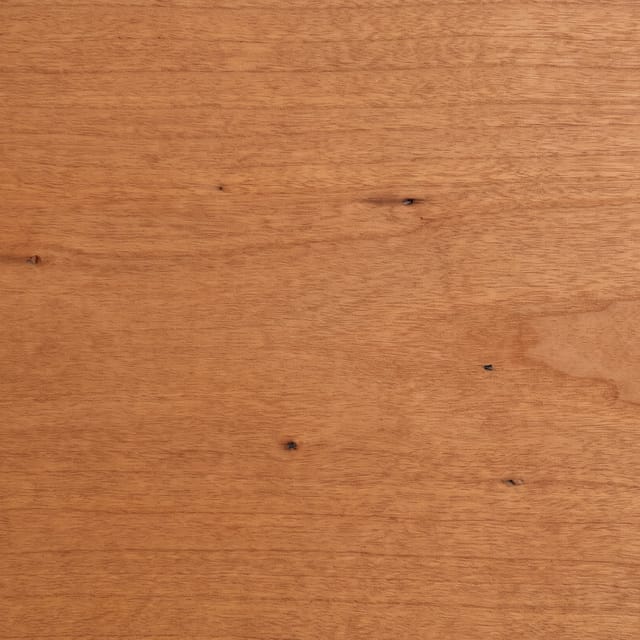
Black cherry
Prunus serotina
Starts pale pink and deepens to a rich red-brown with light: a classic American cabinet and furniture wood.
- Janka hardness
- 950 lbf
- Cost
- Cost tier 2 of 4
Use this wood, black cherry, in my projectFull profile: Black cherry
Starts pale pink and deepens to a rich red-brown with light: a classic American cabinet and furniture wood.
- Color
- Heartwood light pinkish brown when freshly cut, darkening to medium reddish brown with time and light. Wide sapwood is pale yellowish, and boards often carry some sapwood on the edges.
- Grain
- Usually straight except in curly figured pieces; fine, even texture with moderate natural luster.
- Janka hardness
- 950 lbf (4,230 N)
- How it ages
- Darkens to a rich reddish-brown patina with time and light; the change can be accelerated with judicious sunlight exposure (Wood Database).
- Stain and finish
- Can stain blotchy; Wood Database recommends a sanding sealer before staining or a gel stain. Flexner: on cherry, blotching is usually ugly but can be attractive. Its patina is often imitated with stain on other woods such as yellow poplar.
- Working it
- One of the best all-around woods for workability: stable, straight-grained, machines well (Wood Database).
- Common uses
- Cabinetry, Fine furniture, Flooring, Interior millwork, Veneer, Turned objects.
- Movement
- A 36-inch board going from 6% to 10% moisture moves about 0.36 in. flatsawn and 0.18 in. quartersawn (USDA Wood Handbook). Tangential shrinkage, green to oven-dry: 7.1%.
- Cost
- Cost tier 2 of 4. 4/4 base: $6.75/bf at The Wood Yard; $4.50/bf at CR Muterspaw. Hearne lists $3.00 to $14.75 across grades (quartersawn $9.80 to $13.30). The Wood Database calls cherry "mid to upper range" for a domestic hardwood, but both current 2026 retail lists price it with ash and red oak, so the rule puts it in Tier 2.
- Missouri
- MDC: found statewide; "Demand for quality black cherry wood ranks second only to black walnut." MU Extension G5006: found statewide on moist bottoms and dry upland soils.
Sources The Wood Database: black cherry; Flexner, Battling Blotching; MDC field guide: black cherry; MU Extension G5006; The Wood Yard price list; CR Muterspaw price list; Hearne Hardwoods price list; USDA Wood Handbook, ch. 13
-
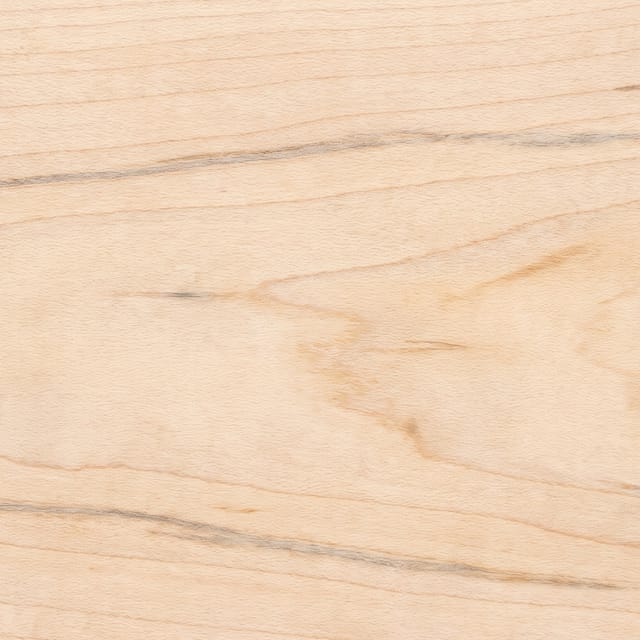
Soft maple
Acer spp.; in Missouri mainly red maple (Acer rubrum) and silver maple (Acer saccharinum)
Maple’s easier-working cousin: about as hard as cherry and walnut, with the same fine, even grain.
- Janka hardness
- 950 lbf (red maple)
- Cost
- Cost tier 3 of 4
Use this wood, soft maple, in my projectFull profile: Soft maple
Maple’s easier-working cousin: about as hard as cherry and walnut, with the same fine, even grain.
- Color
- Sapwood (the part usually sold) almost white to light golden or reddish brown; heartwood darker reddish brown. Tends to be a bit darker than hard maple, with red, brown, or gray streaks. Curly and quilted figure occur.
- Grain
- Generally straight, may be wavy; fine, even texture. Growth rings are lighter and less distinct than in hard maple.
- Janka hardness
- 700 to 950 lbf depending on species; red maple 950 lbf (4,230 N), silver maple 700 lbf (3,110 N)
- How it ages
- No species-specific color-change statement on the Wood Database page. General rule from the USDA Wood Handbook (ch. 16): indoors, light woods tend to darken and dark woods lighten, driven by visible light. Applying that rule to this species is our inference.
- Stain and finish
- Blotches can occur when staining; a pre-conditioner, gel stain, or toner may be needed (Wood Database red and silver maple pages). Flexner: on soft maple, blotching is usually ugly but can be attractive.
- Working it
- Slightly easier to work than hard maple, dulls edges and burns less readily (Wood Database article on hard vs soft maple).
- Common uses
- Furniture, Cabinetry (stained or painted), Veneer, Boxes, Musical instruments, Turned objects.
- Movement
- A 36-inch board going from 6% to 10% moisture moves about 0.42 in. flatsawn and 0.20 in. quartersawn (USDA Wood Handbook). Tangential shrinkage, green to oven-dry: 8.2%.
- Cost
- Cost tier 3 of 4. 4/4 base: $8.25/bf at The Wood Yard; $5.20/bf (white) at CR Muterspaw. Hearne lists FAS at $6.75 to $13.00. The Wood Database article says soft maple costs "about half as much" as hard maple, but both current retail lists show near parity for white-sorted stock.
- Missouri
- MDC: red maple is a native Missouri tree, scattered to common in the Ozark, Ozark Border, and Mississippi Lowlands divisions and cultivated statewide. Silver maple is native and found statewide (MDC).
Sources The Wood Database: soft maple; The Wood Database: red maple; The Wood Database: silver maple; USDA Wood Handbook, ch. 16; Flexner, Battling Blotching; MDC field guide: silver maple; The Wood Database, differences between hard maple and soft maple; MDC field guide: red maple; The Wood Yard price list; CR Muterspaw price list; Hearne Hardwoods price list; USDA Wood Handbook, ch. 13
-
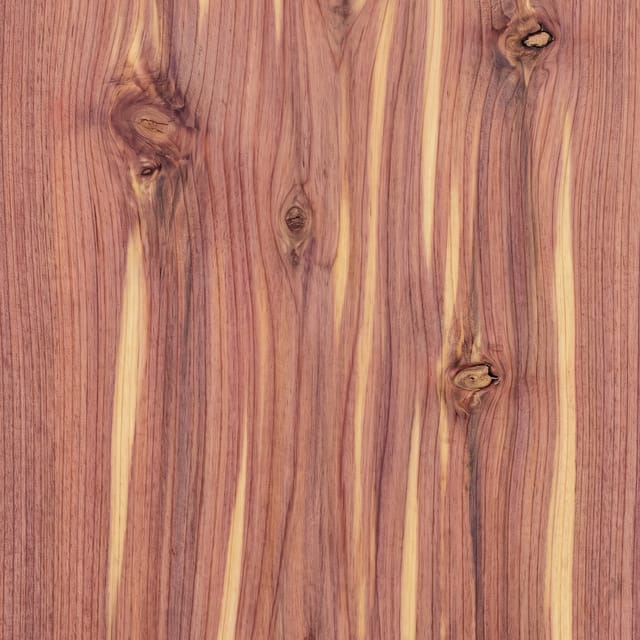
Eastern red cedar
Juniperus virginiana (aromatic red cedar)
Missouri’s aromatic native cedar: purple-red heartwood with cream streaks, the classic closet and chest lining.
- Janka hardness
- 900 lbf
- Cost
- Cost tier 3 of 4
Use this wood, eastern red cedar, in my projectFull profile: Eastern red cedar
Missouri’s aromatic native cedar: purple-red heartwood with cream streaks, the classic closet and chest lining.
- Color
- Heartwood reddish or violet-brown; pale yellow sapwood can run through the heartwood as streaks and stripes.
- Grain
- Straight grain, usually with knots; very fine, even texture.
- Janka hardness
- 900 lbf (4,000 N)
- How it ages
- No species-specific statement found on the Wood Database page or MDC page.
- Stain and finish
- Glues and finishes well, but is often left unfinished to preserve its aroma (Wood Database). Its scent is commonly used in closets and chests to repel moths and other insects.
- Working it
- Easy to work apart from knots; reported high silica can dull cutters (Wood Database).
- Common uses
- Closet linings, Chest linings, Carvings, Outdoor furniture, Fence posts.
- Movement
- A 36-inch board going from 6% to 10% moisture moves about 0.23 in. flatsawn and 0.15 in. quartersawn (USDA Wood Handbook). Tangential shrinkage, green to oven-dry: 4.7%.
- Cost
- Cost tier 3 of 4. 4/4: $7.50/bf ("Eastern Cedar", character grade) at The Wood Yard; $5.50/bf (Aromatic Cedar, No. 1 Common and better) at CR Muterspaw. Hearne lists aromatic cedar at $7.00 to $8.00. Wood Database: narrow knotty boards are readily available at a modest price; large or clear sections are much less common.
- Missouri
- MDC: common and statewide; a native juniper that now invades glades and prairies where fire is suppressed. MU Extension G5006: found in every county. Its aromatic wood is used for chests, closets, and interior finish (MDC).
Sources The Wood Database: eastern red cedar; MDC field guide: eastern red cedar; MU Extension G5006; The Wood Yard price list; CR Muterspaw price list; Hearne Hardwoods price list; USDA Wood Handbook, ch. 13
-

Sycamore
Platanus occidentalis (American sycamore)
A native Missouri streamside giant; quartersawn boards show a freckled, lace-like ray pattern.
- Janka hardness
- 770 lbf
- Cost
- Cost tier 3 of 4
Use this wood, sycamore, in my projectFull profile: Sycamore
A native Missouri streamside giant; quartersawn boards show a freckled, lace-like ray pattern.
- Color
- Mostly sapwood, white to light tan, with darker reddish-brown heartwood streaks. Quartersawn faces show distinct ray flecks with a freckled look, sometimes sold as "lacewood".
- Grain
- Fine, even texture similar to maple; interlocked grain.
- Janka hardness
- 770 lbf (3,430 N)
- How it ages
- No species-specific statement found.
- Stain and finish
- Turns, glues, and finishes well (Wood Database). No authoritative blotching data found in the sources checked; test first (our inference).
- Working it
- Works easily, though interlocked grain can cause trouble in surfacing; turns, glues, and finishes well; bends poorly (Wood Database). MDC: difficult to split, hence butcher-block use.
- Common uses
- Furniture, Interior trim, Flooring, Butcher blocks, Veneer, Turned objects.
- Movement
- A 36-inch board going from 6% to 10% moisture moves about 0.43 in. flatsawn and 0.25 in. quartersawn (USDA Wood Handbook). Tangential shrinkage, green to oven-dry: 8.4%.
- Cost
- Cost tier 3 of 4. Only retail price found: Hearne lists quartersawn American sycamore FAS at $6.00 to $12.50/bf, a range similar to its soft maple ($6.75 to $13.00). Wood Database: usually moderately priced, but commonly sold quartersawn, which raises cost. Tier 3 is our estimate.
- Missouri
- MDC: native Missouri deciduous tree found statewide in valleys and bottomlands; largest deciduous tree in the US. MDC’s Conservationist profiles a Perryville sawmill shipping sycamore to Mexico. MU Extension G5006: "found statewide".
Sources The Wood Database: sycamore; MDC field guide: sycamore; MDC Conservationist, Dec 2017; MU Extension G5006; Hearne Hardwoods price list; USDA Wood Handbook, ch. 13
-
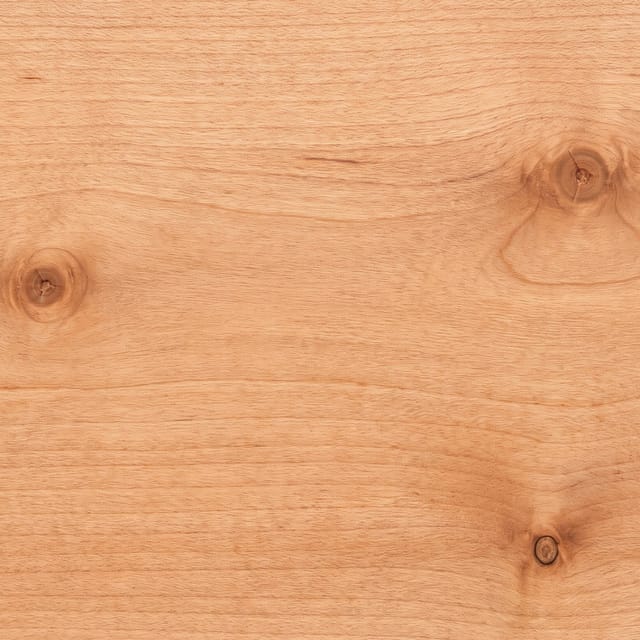
Knotty alder
Alnus rubra (red alder)
Soft, easy-working Pacific Northwest hardwood; the knotty grade brings a warm, rustic look at a utility-wood price.
- Janka hardness
- 590 lbf
- Cost
- Cost tier 1 of 4
Use this wood, knotty alder, in my projectFull profile: Knotty alder
Soft, easy-working Pacific Northwest hardwood; the knotty grade brings a warm, rustic look at a utility-wood price.
- Color
- Light tan to reddish brown with no visible heartwood/sapwood distinction. Aggregate rays show as small streaks. Sold in knotty and clear grades.
- Grain
- Generally straight; moderately fine, uniform texture.
- Janka hardness
- 590 lbf (2,620 N)
- How it ages
- Color darkens and reddens with age (Wood Database).
- Stain and finish
- Turns, glues, and finishes well (Wood Database). Flexner: on alder, blotching is almost always quite ugly, so test and use a washcoat or gel stain.
- Working it
- Very easy to work and sands especially easily, but soft enough to dent. Good stability once dried (Wood Database).
- Common uses
- Cabinetry, Furniture, Millwork, Veneer, Plywood, Electric guitar bodies.
- Movement
- A 36-inch board going from 6% to 10% moisture moves about 0.37 in. flatsawn and 0.22 in. quartersawn (USDA Wood Handbook). Tangential shrinkage, green to oven-dry: 7.3%.
- Cost
- Cost tier 1 of 4. 4/4 knotty (character grade): $4.30/bf at The Wood Yard. CR Muterspaw lists 4/4 alder with no posted price; Hearne does not list it. Wood Database: knotty red alder is usually inexpensive, on par with domestic utility woods; clear alder costs more, closer to cabinet hardwoods. Single retail price, so the tier is lower confidence.
- Missouri
- Wood Database distribution: coastal western North America (the most abundant hardwood in the Pacific Northwest). No MDC field-guide entry was found. Not a Missouri species; lumber is shipped in.
Sources The Wood Database: red alder; Flexner, Battling Blotching; The Wood Yard price list; CR Muterspaw price list; USDA Wood Handbook, ch. 13
-
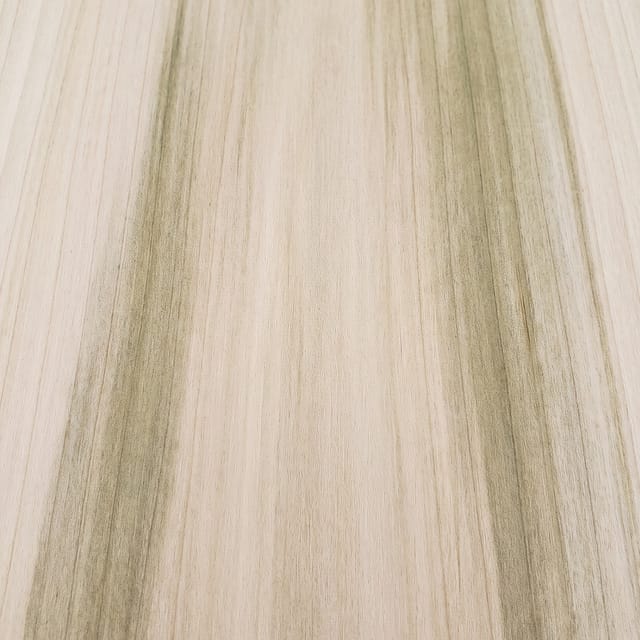
Yellow poplar (paint grade)
Liriodendron tulipifera (tulip tree)
The paint-grade standard: an affordable, easy-machining hardwood that disappears under a smooth painted finish.
- Janka hardness
- 540 lbf
- Cost
- Cost tier 1 of 4
Use this wood, yellow poplar (paint grade), in my projectFull profile: Yellow poplar (paint grade)
The paint-grade standard: an affordable, easy-machining hardwood that disappears under a smooth painted finish.
- Color
- Heartwood light cream to yellowish brown with occasional gray or green streaks; sapwood pale yellow to white. Mineral-stained "rainbow poplar" shows purple, red, green, or yellow.
- Grain
- Straight, uniform grain with a medium texture and low luster.
- Janka hardness
- 540 lbf (2,400 N)
- How it ages
- Colors tend to darken on exposure to light (Wood Database).
- Stain and finish
- Flexner: on poplar, blotching is almost always quite ugly, which is why it is mainly used under paint. Hearne Hardwoods: one of the most used secondary woods for paint-grade lumber, drawer sides, and furniture backs.
- Working it
- Very easy to work; its softness can leave fuzzy surfaces, so finer sanding grits may be needed (Wood Database).
- Common uses
- Paint-grade cabinets and trim, Drawer sides, Furniture frames, Plywood, Veneer.
- Movement
- A 36-inch board going from 6% to 10% moisture moves about 0.42 in. flatsawn and 0.23 in. quartersawn (USDA Wood Handbook). Tangential shrinkage, green to oven-dry: 8.2%.
- Cost
- Cost tier 1 of 4. 4/4 base: $5.35/bf at The Wood Yard; $2.95/bf at CR Muterspaw. Hearne lists FAS at $4.00 to $8.50. Wood Database: among the most economical of all domestic hardwoods.
- Missouri
- Native but local: MDC says it occurs naturally in southeastern Missouri and is widely planted statewide. MU Extension G5006: native to southeastern Missouri, but not the Bootheel. Not native to the Springfield area (our reading of those ranges).
Sources The Wood Database: yellow poplar; Flexner, Battling Blotching; Hearne Hardwoods on poplar; MDC field guide: tulip tree yellow poplar; MU Extension G5006; The Wood Yard price list; CR Muterspaw price list; Hearne Hardwoods price list; USDA Wood Handbook, ch. 13
-
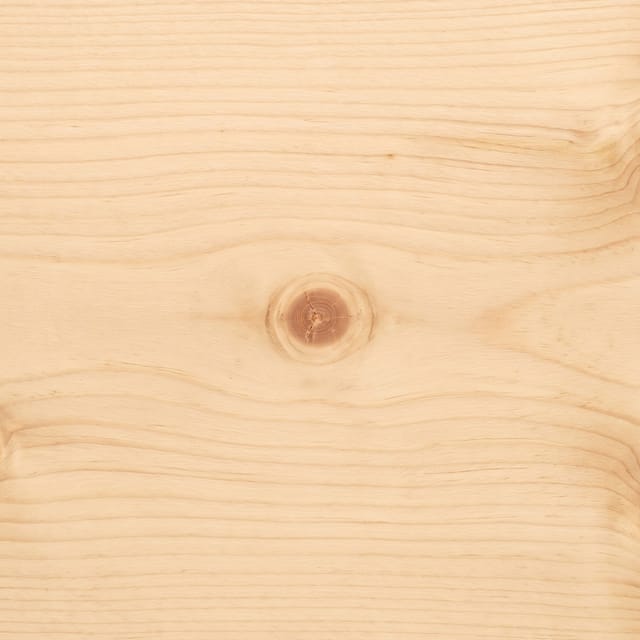
Eastern white pine
Pinus strobus
The lightest, softest, lowest-cost option: easy to work, but it dents easily and blotches if stained.
- Janka hardness
- 380 lbf
- Cost
- Cost tier 1 of 4
Use this wood, eastern white pine, in my projectFull profile: Eastern white pine
The lightest, softest, lowest-cost option: easy to work, but it dents easily and blotches if stained.
- Color
- Heartwood light brown, sometimes slightly reddish; sapwood pale yellow to nearly white.
- Grain
- Straight grain with an even, medium texture.
- Janka hardness
- 380 lbf (1,690 N)
- How it ages
- Color tends to darken with age (Wood Database).
- Stain and finish
- Flexner: of all common woods, pine blotches worst; use a washcoat or gel stain. Resinous knots should be sealed with shellac before other finishes (Flexner).
- Working it
- Easy to work with hand and machine tools; glues and finishes well (Wood Database). The softest wood in this set, so it dents easily (going by its Janka rating).
- Common uses
- Interior millwork, Carving, Boxes, Construction lumber.
- Movement
- A 36-inch board going from 6% to 10% moisture moves about 0.31 in. flatsawn and 0.10 in. quartersawn (USDA Wood Handbook). Tangential shrinkage, green to oven-dry: 6.1%.
- Cost
- Cost tier 1 of 4. 4/4: $3.75/bf ("White pine") at The Wood Yard; $3.60/bf at CR Muterspaw. Hearne lists $3.00 to $10.00 depending on grade. Lowest average price of the 13. Wood Database: moderate for a domestic softwood.
- Missouri
- MDC: "Eastern white pine is not native to our state"; introduced in plantations, landscaping, and windbreaks. MU Extension G5006: "Shortleaf is the only pine native to Missouri."
Sources The Wood Database: eastern white pine; Flexner, Battling Blotching; Flexner, Wood Finishing Basics; MDC field guide: eastern white pine; MU Extension G5006; The Wood Yard price list; CR Muterspaw price list; Hearne Hardwoods price list; USDA Wood Handbook, ch. 13
-
Not sure yet?
Pick a wood, or let us help you choose
Tell us what you’re building and how the room gets used, and we’ll talk through hardness, finish and budget with you. Ask us what’s available right now.
Quick picks from the numbers
- HardestHickory / pecan 1,880, hard maple 1,450 and white oak 1,350 lbf
- Moves leastEastern red cedar 0.23, eastern white pine 0.31 and black cherry 0.36 in. across a flatsawn 36-inch top
- Stains evenlyWhite oak, red oak and white ash don’t tend to blotch
- Under paintYellow poplar, the standard paint-grade wood
- Changes with lightBlack cherry darkens, black walnut lightens
Compare
Compare two woods
Pick any two. The table lines them up on hardness, cost, stain, aging, movement and where they grow in Missouri.
All 13 woods side by side: black walnut and white oak first, then the rest hardest first. Scroll the table sideways to see every column.
|
|
|
|
|
|
|
|
|
|
|
|
|
|
|
|---|---|---|---|---|---|---|---|---|---|---|---|---|---|
| Janka hardness | 1,010 lbf | 1,350 lbf | 1,880 lbf (shagbark) | 1,450 lbf | 1,320 lbf | 1,220 lbf | 950 lbf | 950 lbf (red maple) | 900 lbf | 770 lbf | 590 lbf | 540 lbf | 380 lbf |
| Cost tier | 4 of 4 | 3 of 4 | 2 of 4 | 3 of 4 | 2 of 4 | 2 of 4 | 2 of 4 | 3 of 4 | 3 of 4 | 3 of 4 | 1 of 4 | 1 of 4 | 1 of 4 |
| Color | Pale to dark chocolate brown, sometimes with a gray, purple or reddish cast | Light to medium brown, often with an olive cast | Light to medium brown heartwood with pale sapwood, often mixed | Nearly white to off-white cream | Light to medium brown with wide beige sapwood | Light to medium brown with a reddish cast | Light pinkish brown, darkening to reddish brown | Near white to light golden, with red, brown or gray streaks | Reddish or violet-brown with cream streaks | White to light tan with reddish-brown streaks | Light tan to reddish brown, with knots in the knotty grade | Cream to yellowish brown with gray or green streaks | Light brown heartwood, pale yellow sapwood |
| Grain | Usually straight; medium texture | Straight; coarse texture; ray fleck when quartersawn | Usually straight; medium texture | Straight to wavy; fine, even texture | Straight; medium to coarse, like oak | Straight; coarse texture with very open pores | Usually straight; fine, even texture | Straight to wavy; fine, even texture | Straight and usually knotty; very fine texture | Interlocked; fine, even texture; freckled when quartersawn | Generally straight; fine, uniform texture | Straight, uniform; medium texture | Straight; even, medium texture |
| Stain | Rarely stained; any blotching tends to look good | Stains well and doesn’t tend to blotch | Stains well | Can blotch; a conditioner, gel stain or toner helps | Stains well and doesn’t tend to blotch | Stains well and doesn’t tend to blotch | Can blotch; a sealer or gel stain helps | Can blotch; a conditioner, gel stain or toner helps | Often left unfinished to keep the scent | No blotch data found; test first | Blotches badly; a washcoat or gel stain helps | Blotches badly, so it’s mostly painted | Blotches worst of all; seal the knots first |
| How it ages | Lightens slightly over time | No species statement; light woods tend to darken | No species statement; light woods tend to darken | No species statement; oil-based poly adds a yellow cast | No species statement; light woods tend to darken | No species statement; light woods tend to darken | Darkens to a rich reddish brown | No species statement; light woods tend to darken | Not covered by our sources | Not covered by our sources | Darkens and reddens | Darkens in light | Darkens with age |
| Movement, flatsawn 36 in. board, 6 to 10% moisture | 0.39 in. | 0.53 in. | 0.59 in. | 0.51 in. | 0.39 in. | 0.53 in. | 0.36 in. | 0.42 in. | 0.23 in. | 0.43 in. | 0.37 in. | 0.42 in. | 0.31 in. |
| Movement, quartersawn same board | 0.27 in. | 0.26 in. | 0.37 in. | 0.24 in. | 0.24 in. | 0.23 in. | 0.18 in. | 0.20 in. | 0.15 in. | 0.25 in. | 0.22 in. | 0.23 in. | 0.10 in. |
| Shrinkage, green to dry tangential | 7.8% | 10.5% | 10.5% | 9.9% | 7.8% | 8.6% | 7.1% | 8.2% | 4.7% | 8.4% | 7.3% | 8.2% | 6.1% |
| Missouri | Native statewide; MDC calls it Missouri’s most valuable tree | Native statewide; white oaks are 30% of the state’s harvest | Native statewide; the fourth most harvested group | Native; common statewide | Native statewide; threatened by the emerald ash borer | Native statewide; red oaks are 43% of the state’s harvest | Native statewide | Red maple native in the Ozarks; silver maple statewide | Native; found in every county | Native statewide in valleys and bottomlands | Not a Missouri tree; shipped in from the Pacific Northwest | Native only in southeastern Missouri | Not native to Missouri |
| Good for | Furniture, Cabinetry, Interior paneling | Cabinetry, Furniture, Interior trim | Furniture, Flooring, Rustic cabinetry | Cutting boards, Butcher blocks, Furniture | Cabinets, Doors, Millwork | Cabinetry, Furniture, Interior trim | Fine furniture, Cabinetry, Interior millwork | Furniture, Cabinetry, Painted work | Closet linings, Chest linings, Outdoor furniture | Furniture, Interior trim, Butcher blocks | Cabinetry, Furniture, Millwork | Paint-grade cabinets, Paint-grade trim, Drawer sides | Interior millwork, Carving, Boxes |
| Next step | Use this wood, black walnut, in my project | Use this wood, white oak, in my project | Use this wood, hickory / pecan, in my project | Use this wood, hard maple, in my project | Use this wood, white ash, in my project | Use this wood, red oak, in my project | Use this wood, black cherry, in my project | Use this wood, soft maple, in my project | Use this wood, eastern red cedar, in my project | Use this wood, sycamore, in my project | Use this wood, knotty alder, in my project | Use this wood, yellow poplar (paint grade), in my project | Use this wood, eastern white pine, in my project |
Janka, color, grain and shrinkage: The Wood Database. Stain behavior: The Wood Database and Bob Flexner. Movement: USDA Wood Handbook, Table 13-5. Missouri: MDC field guide. Swatches are representative samples.
Finish
How finish changes the look
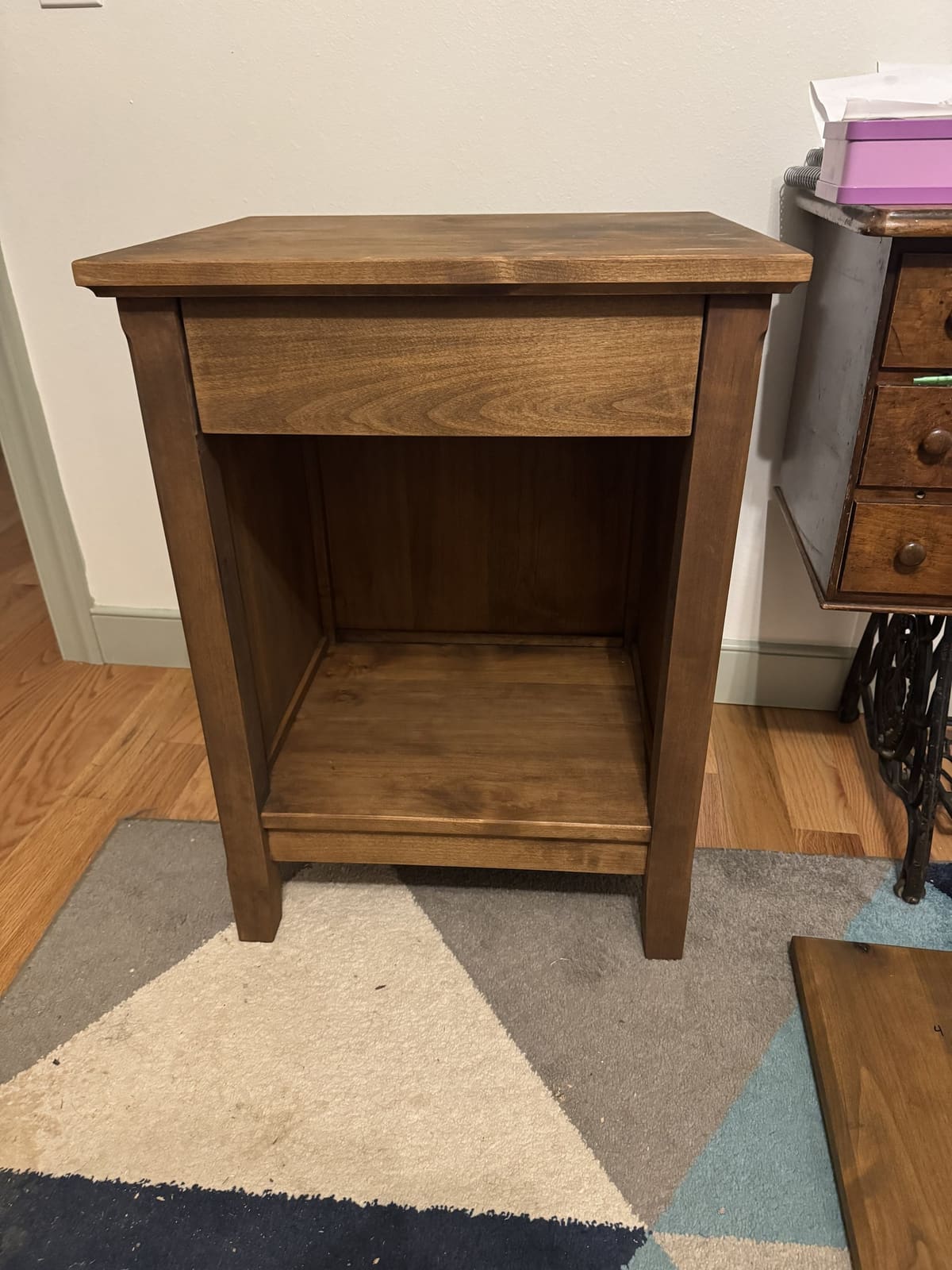
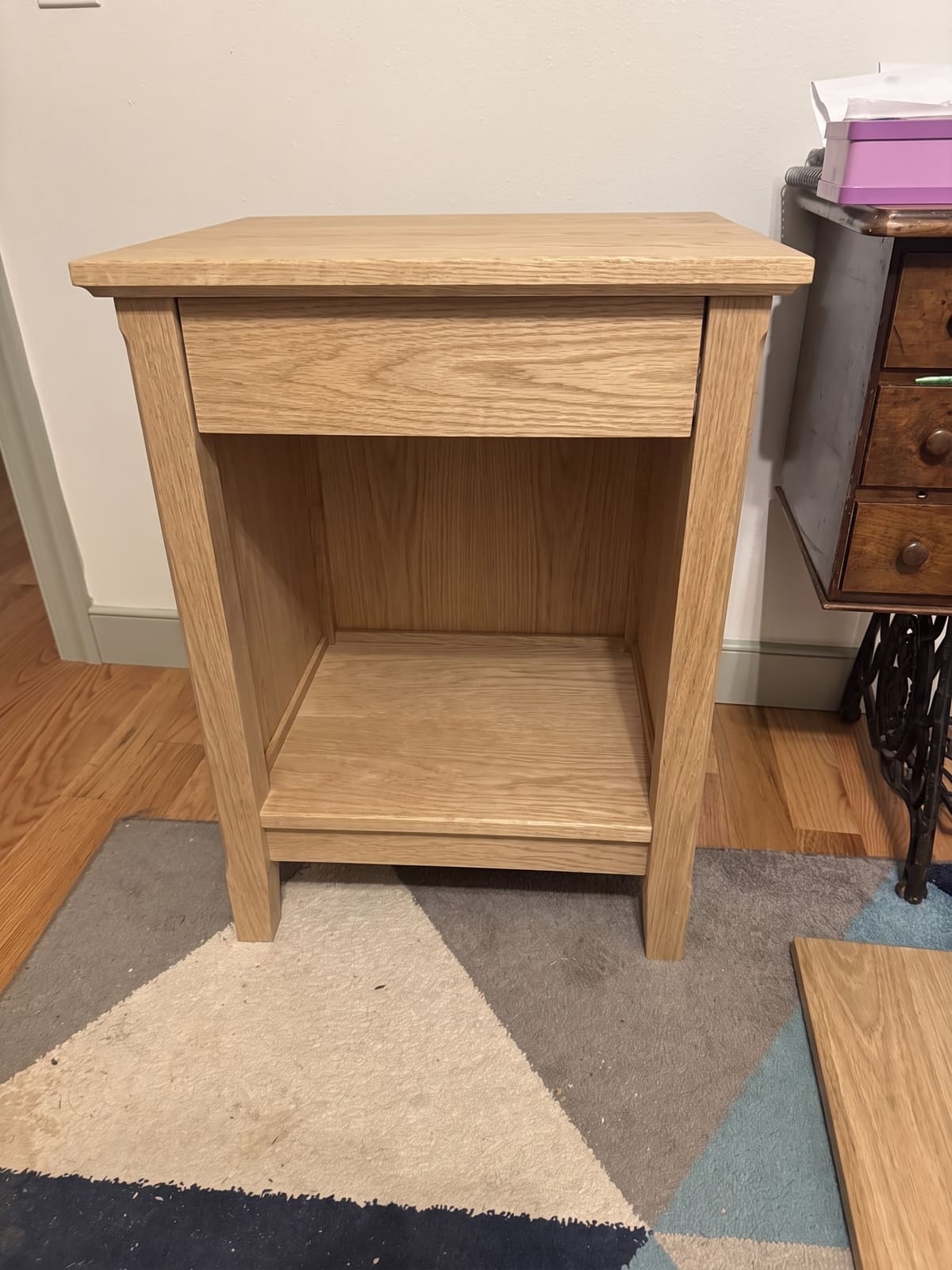
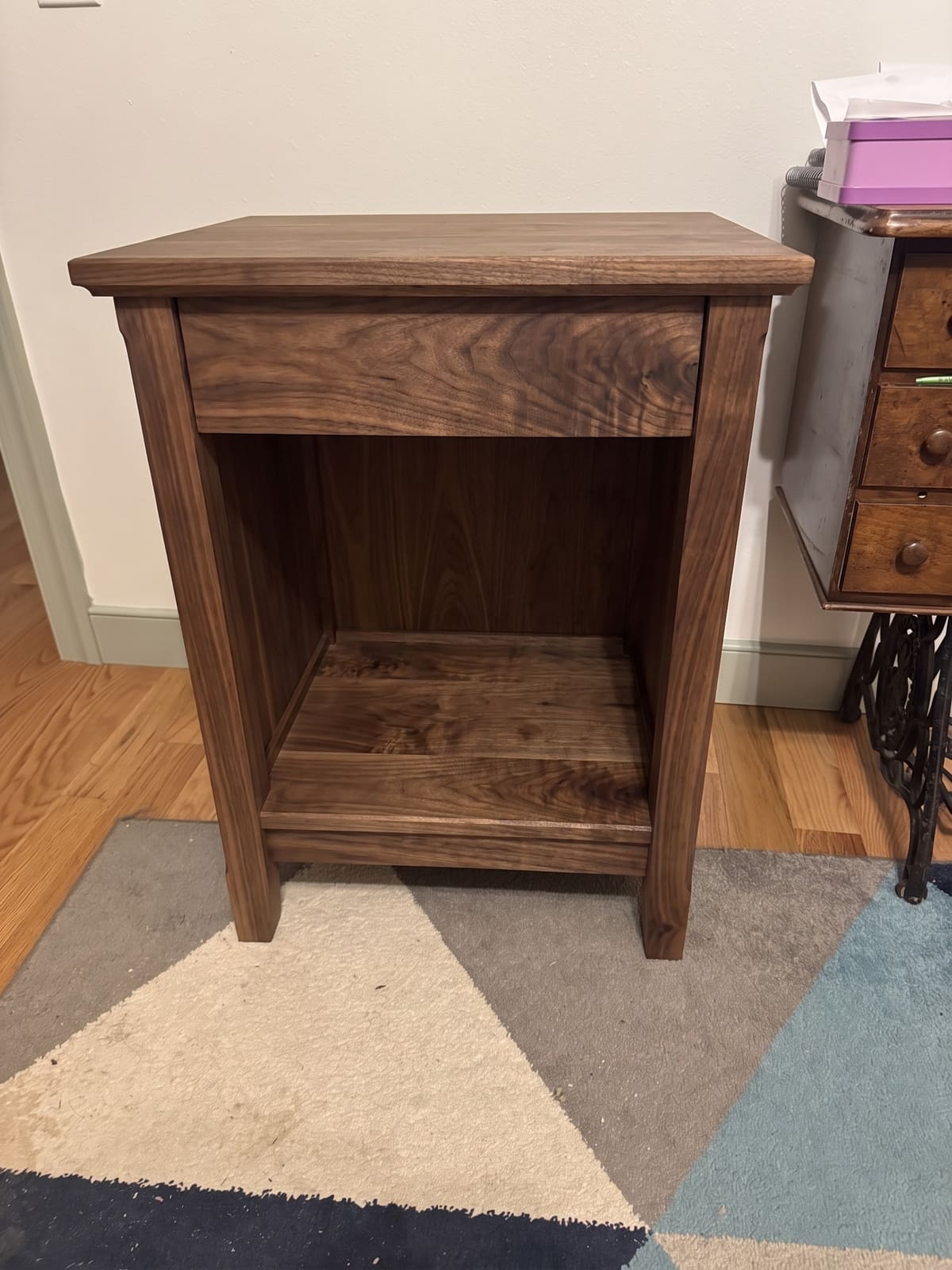
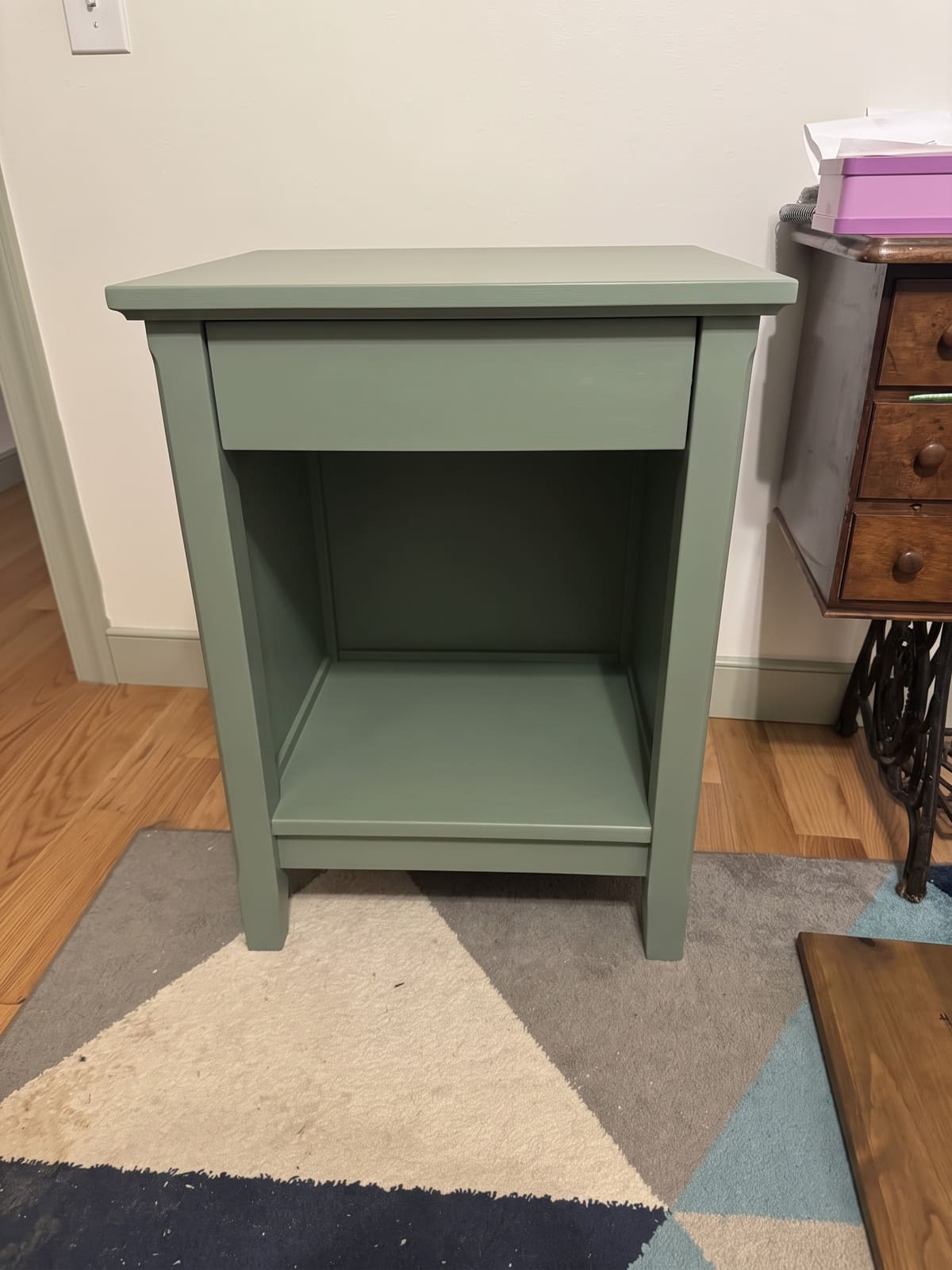
The same nightstand twice: the real one we built on the left, a digital preview on the right. Drag the divider, or pick another wood or finish above the photo.
- Oil-based polyurethane adds a yellow-orange tint and keeps darkening as it ages, according to finishing author Bob Flexner. On maple it reads as a warm, yellowed cast.
- Water-based finishes add no color. That keeps maple, ash and white oak pale, but Popular Woodworking notes it can make cherry or walnut look cold.
- Boiled linseed oil darkens considerably as it ages (Flexner).
- Paint hides the grain, which is why paint-grade work is about a smooth, stable surface. We put solid hardwood under all paint-grade finishes.
Aging
Cherry darkens with light
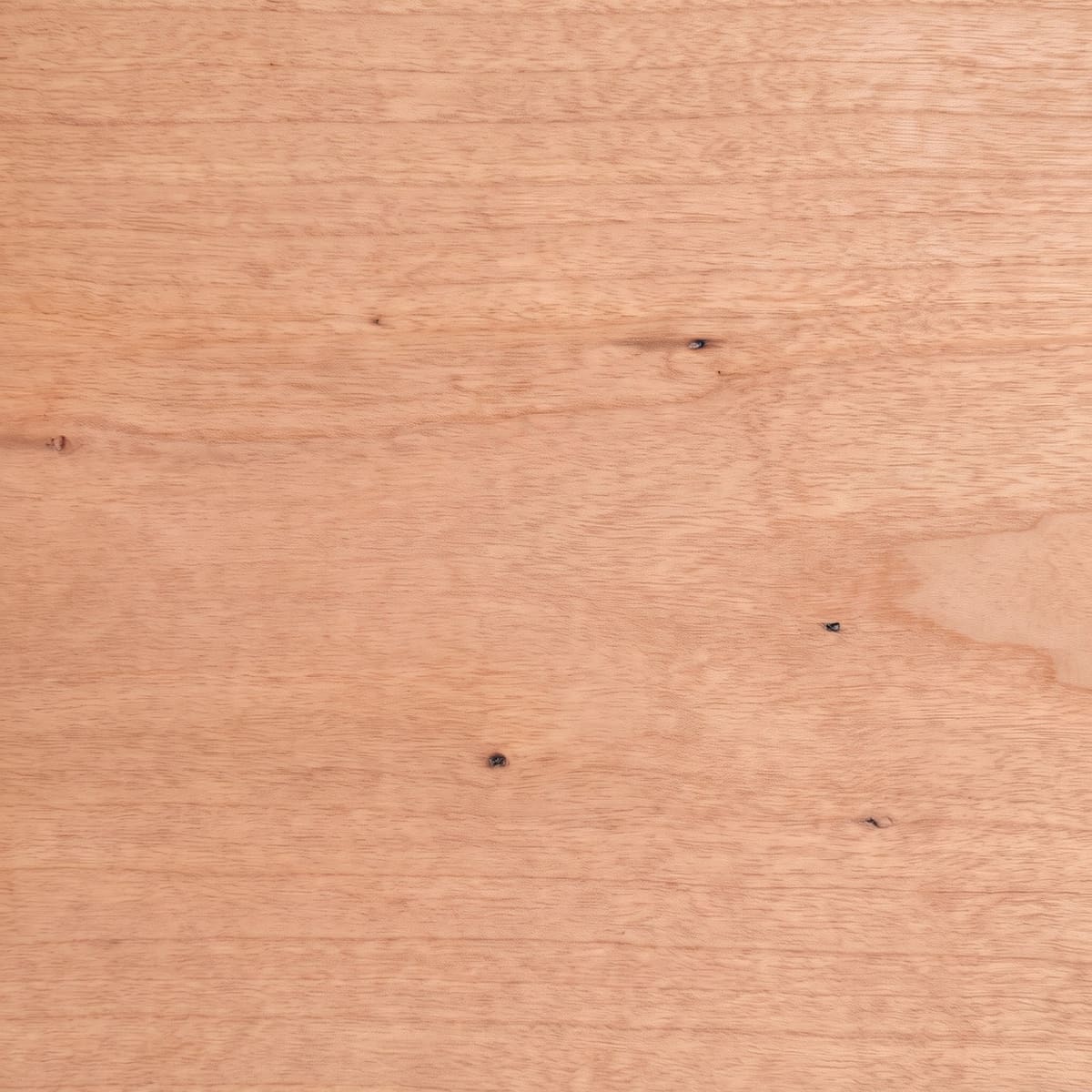
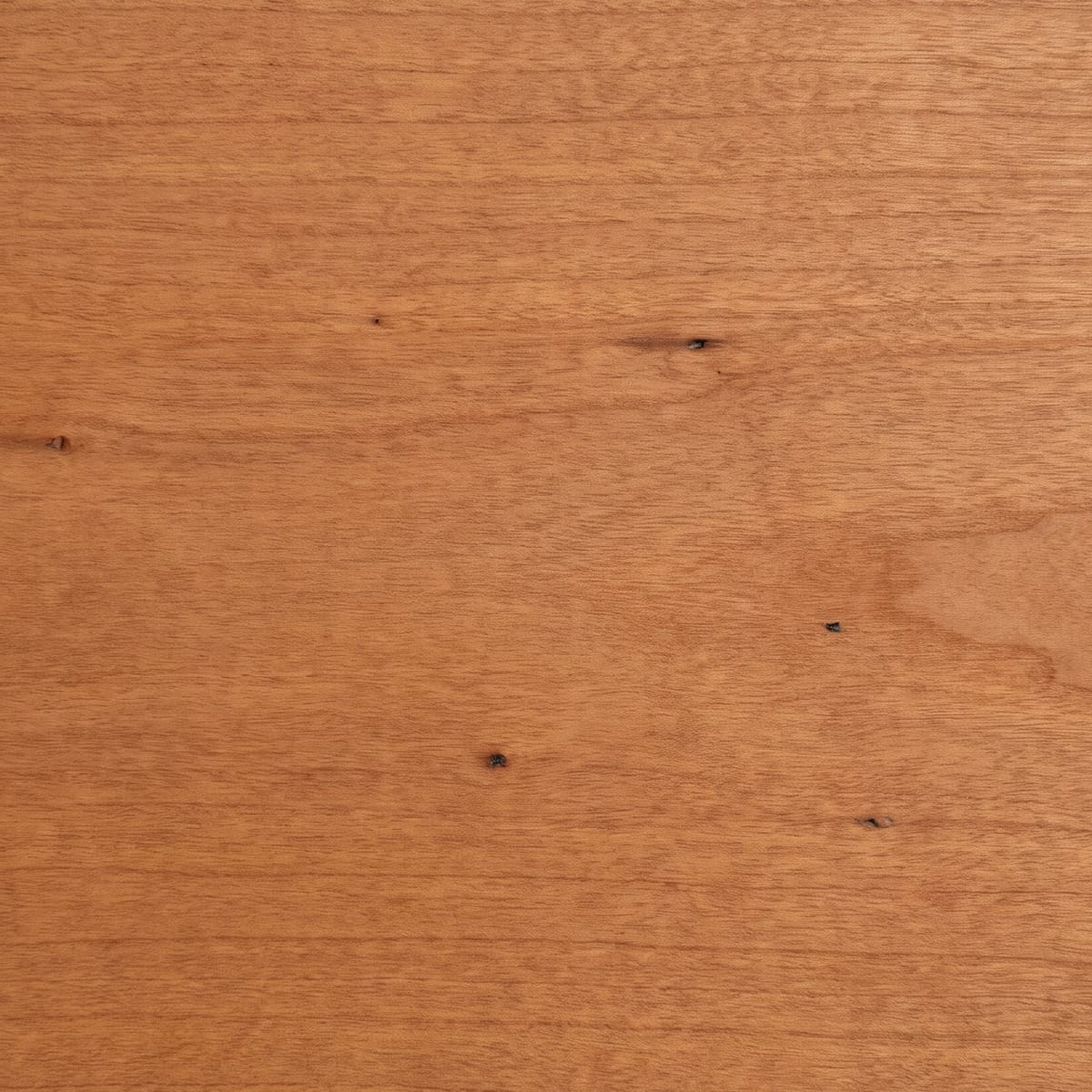
Fresh-cut cherry is a light pinkish brown. With time and light it deepens to a medium reddish brown, and The Wood Database notes the change can be sped up with careful exposure to sunlight.
The USDA Wood Handbook says indoor color change comes from visible light, not UV, and a spot that sat in shade, like the outline of a lamp base, usually evens out within several months once it’s uncovered. New cherry set beside old cherry will start out lighter and catch up.
How the other woods change
- Black walnut
- Lightens slightly, a smaller change than cherry’s.
- Knotty alder
- Darkens and reddens with age.
- White pine and yellow poplar
- Both darken with age and light.
- Oak, maple, ash, hickory
- No species-specific data. The Handbook’s general rule: light woods tend to darken and dark woods lighten.
Finishes
Finish guide
Nine common finishes, from a wiped-on oil to paint. The finish decides as much about how a piece holds up as the wood does.
| Finish | Protection | Repair | Look | Typical fit |
|---|---|---|---|---|
| Penetrating oilBoiled linseed, tung, Danish oil | Lowest. No real film; Flexner calls oil almost worthless for water resistance. | Easy to reapply. The USDA calls oil finishes easy to apply and maintain. | Natural and low sheen. Boiled linseed oil adds yellow-orange and darkens a lot with age. | Low-wear pieces, turnings |
| Hardwax oilOsmo Polyx-Oil, Rubio Monocoat Oil Plus 2C | The makers claim good resistance to water and household spills. It builds very little film. | Spot-repairable without sanding, according to both makers. | Matte to satin, close to raw wood. | Tables, live-edge tops, floors |
| ShellacAmber or clear | Low. Scratches, solvents and heat all mark it. | Among the easiest finishes to repair invisibly. | Warm amber or clear. French polish gives the most depth. | Fine furniture, sealer coats |
| Nitrocellulose lacquerClassic spray lacquer | Low to moderate. | Easy. New coats melt into the old ones. | A slight yellow-orange tint; rubs out well. | Furniture |
| Pre-catalyzed lacquerSprayed, ready to use | About as durable as oil-based polyurethane (Flexner). | Repairable with common touch-up products. | Like lacquer, in many sheens. | Cabinets and furniture |
| Conversion varnishTwo-part catalyzed finish | The highest of these. Some products meet KCMA cabinet tests. | The hardest. Flexner says damage is often very difficult or impossible to repair. | Clear or pigmented; some don’t yellow. | Kitchen and bath cabinets |
| Oil-based polyurethaneAlkyd-modified varnish | High. | Hard to spot-repair, since the cured film won’t redissolve. | Adds a yellow-orange tint and keeps darkening as it ages. | Tables, desks, floors |
| Water-based polyurethaneWaterborne clear coat | Slightly below oil-based; the difference is fairly minor today. | Easier than the catalyzed finishes (Flexner). | Adds no color. Can look cold on cherry or walnut. | Maple, ash, white oak, pale looks |
| PaintEnamel, waterborne alkyd, pigmented conversion varnish | Depends on the product. Pigmented conversion varnish meets KCMA tests. | Touch-up is possible. | Hides the grain completely. | Paint-grade cabinets, trim, built-ins |
By what you’re finishing
- Kitchen and bath cabinets
Conversion varnish is the toughest, and KCMA-compliant versions exist. Pre-cat lacquer and either polyurethane hold up well too. For painted cabinets, pigmented conversion varnish or a waterborne alkyd. Skip plain oil and shellac, and trade forums report nitro lacquer peeling near sinks.
- Dining tables and live-edge tops
Oil-based poly and conversion varnish give the most protection, though conversion varnish is hard to repair. A hardwax oil gives a matte, close-to-raw look you can spot-repair yourself. Shellac marks from heat, alcohol and water.
- Butcher block and cutting surfaces
Mineral oil, wax or no finish at all. The USDA says film finishes perform poorly on cutting surfaces, and Flexner warns that chips of finish end up in the food. Rubio doesn’t recommend its Oil Plus 2C for boards you cut on.
- Trim, built-ins and heirloom pieces
Lacquer, pre-cat, polyurethane or paint all suit trim and built-ins. For heirloom furniture that sees light use, shellac and hardwax oil are good choices as well.
Sources: Bob Flexner in Popular Woodworking (Wood Finishing Basics, Catalyzed Finishes, Cutting Boards); USDA Wood Handbook, ch. 16; Woodshop News; Products Finishing; makers’ data from Osmo, Rubio Monocoat, Sherwin-Williams and Benjamin Moore. Hardwax oil figures are the makers’ own claims.
Movement
Wood movement calculator
Solid wood swells and shrinks across its width as indoor humidity rises and falls, most of all along the growth rings. Enter a width to see how much a top or panel can move.
Estimated width change
0.53 in., About 1/2 inch
A 36-inch flatsawn white oak top can move about 0.53 inches between a dry winter and a humid summer.
The math 36 in. × 0.00365 × 4 = 0.53 in.
Width × the species’ shrinkage coefficient × the change in moisture content (USDA Wood Handbook, equation 13-2 and Table 13-5). The Handbook says this probably overstates width change for real lumber, which is rarely perfectly flatsawn, so read it as an upper estimate.
Why it matters
- Wood shrinks about twice as much along the growth rings as across them, so quartersawn boards move about half as much as flatsawn ones (USDA Wood Handbook, ch. 4).
- At 70°F, 30% relative humidity holds wood near 6.2% moisture and 50% holds it near 9.2% (Table 4-2). Steady indoor humidity means less movement.
- A solid top has to be fastened so it can move with the seasons, and a door panel floats in its frame for the same reason.
| Species | Flatsawn | Quartersawn |
|---|---|---|
| Hickory / pecan | 0.59 | 0.37 |
| Red oak | 0.53 | 0.23 |
| White oak | 0.53 | 0.26 |
| Hard maple | 0.51 | 0.24 |
| Sycamore | 0.43 | 0.25 |
| Soft maple | 0.42 | 0.20 |
| Yellow poplar (paint grade) | 0.42 | 0.23 |
| Black walnut | 0.39 | 0.27 |
| White ash | 0.39 | 0.24 |
| Knotty alder | 0.37 | 0.22 |
| Black cherry | 0.36 | 0.18 |
| Eastern white pine | 0.31 | 0.10 |
| Eastern red cedar | 0.23 | 0.15 |
Inches. Coefficients from USDA Wood Handbook Table 13-5; soft maple uses red maple, hickory uses true hickory.
Missouri
Wood and Missouri
Eleven of the 13 woods in this guide are native to Missouri, most of them statewide. The Missouri Department of Conservation tracks what gets cut and what’s at risk.
- 43% Red oaks, the most harvested group
- 30% White oaks
- 27% Everything else, led by black walnut, hickory and shortleaf pine
- sawmills in Missouri, 2016
- 380
- board feet processed, 2015
- 760M
- oak barrels made a year
- 2.5M
- native tree species
- 160+
- Walnut country. Missouri has more black walnut trees than any other state and is the world’s top producer of black walnuts. MDC calls walnut Missouri’s most valuable tree.
- White oak’s value. MDC says white oak wood is second only to walnut in unit value, and Missouri is a national leader in oak barrels.
- Threats. The emerald ash borer is in Missouri, and MDC expects nearly all ash trees to die. Thousand cankers disease threatens walnut; MDC estimates it could cost $851 million over 20 years.
- Not from here. Knotty alder is shipped in from the Pacific Northwest, and eastern white pine isn’t native; shortleaf is Missouri’s only native pine (MU Extension). Yellow poplar grows wild only in the southeast of the state.
Sources: MDC Conservationist, MDC on thousand cankers disease, the MDC field guide and MU Extension G5006.
Where these facts come from
All sources checked in September 2026. Each wood’s full profile lists the pages behind it.
- Species facts. The Wood Database (Eric Meier): Janka hardness, color, grain, shrinkage, working and finishing notes.
- Movement and finishing. USDA Forest Products Laboratory, Wood Handbook: ch. 4, ch. 13 and ch. 16.
- Missouri. Missouri Department of Conservation field guide, Conservationist and Timber Price Trends; University of Missouri Extension G5006.
- Cost tiers. 4/4 lumber from The Wood Yard (GA) and CR Muterspaw (OH), averaged: tier 1 is under $4.50 a board foot, 2 is $4.50 to $5.99, 3 is $6.00 to $9.99 and 4 is $10.00 and up. Hearne Hardwoods served as a cross-check.
Questions
Questions about choosing a wood
Anything else, call or text.
What’s the hardest wood for kitchen cabinets?
Of the 13 in this guide, hickory is the hardest at 1,880 lbf on the Janka scale (shagbark), then hard maple at 1,450, white oak at 1,350 and red oak at 1,220, according to The Wood Database. Walnut rates 1,010 and cherry 950. Harder woods resist dents better. On painted cabinets the wood under the paint matters too, and we put solid hardwood under all paint-grade finishes.
Is walnut or oak better for a dining table?
Oak is harder. White oak rates 1,350 lbf and red oak 1,220, against 1,010 for black walnut, so oak shrugs off dents better. People pick walnut for its color and figure. The finish does as much for a table as the species, so look at the finish guide too.
Which woods take stain evenly?
Oak and ash don’t tend to blotch, according to finishing author Bob Flexner, and The Wood Database says both stain well. Cherry, maple, alder, poplar and pine can blotch, and pine blotches worst. Those woods usually get a conditioner or washcoat, a gel stain or a toner first. Walnut is rarely stained at all.
Does cherry really get darker?
Yes. Fresh cherry is a light pinkish brown and darkens to a medium reddish brown with time and light (The Wood Database). The USDA Wood Handbook says visible light drives the change indoors, and a spot that sat in shade usually evens out within several months. The cherry illustration shows the idea.
How much will a solid wood tabletop move?
A 36-inch flatsawn white oak top can move about half an inch between 6% and 10% moisture content, the range the USDA Wood Handbook gives for most indoor woodwork. Quartersawn boards move about half as much. Try your own numbers in the movement calculator.
Start a project
Found a wood you like?
Our hardwood is locally sourced, and this guide isn’t a stock list, so ask us what’s available right now. Send a few lines about the piece and the wood you’re leaning toward, and we’ll get back to you.
- Call or text(417) 496-4949
- HoursMonday to Friday, 8 AM to 5 PM
- Project plannerPlan it step by step, with photos